Were in ancient Egypt funerals the two Drty mourners more important that the common mourners?


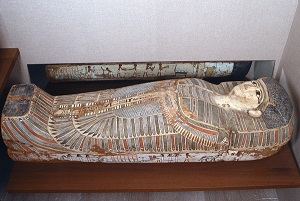
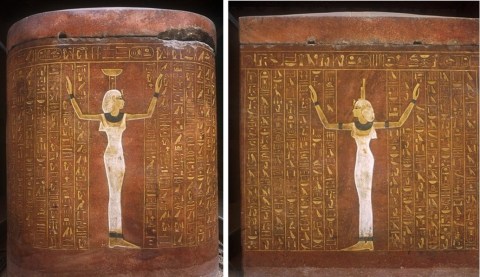
Rishi coffin. Both views with both funerary scenes. XVII-XVIII Dynasty. Thebes. Funerary ceremony in Ancient Egypt.

Rishi coffin. Both views with both funerary scenes. XVII-XVIII Dynasty. Thebes. Photo: www.metmuseum.org

Archaeology has brought to light Egyptian coffins dated in the XVII dynasty and in the early XVIII dynasty coming from Thebes and showing an external decoration which should be a help for the corpse regeneration. Due to the limited space which was the surface of the coffin, it seems obvious to think that the ancient Egypt artists working in Thebes had to choose the main or most effective images.

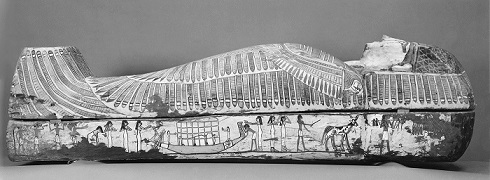
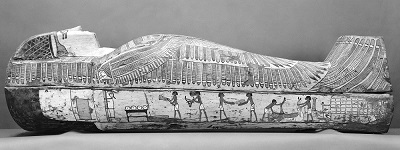
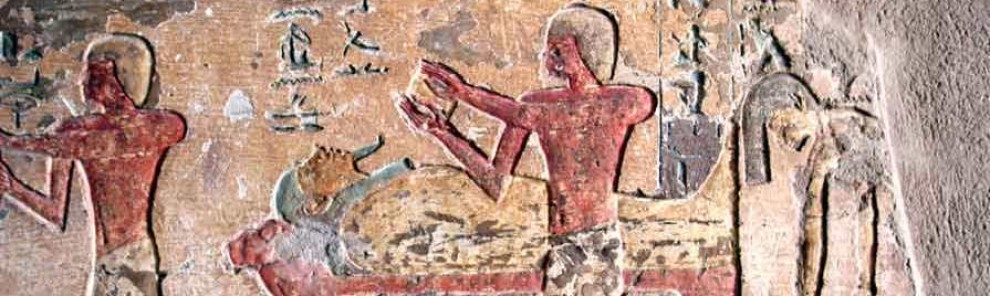
At that point the rishi coffin from the Metropolitan Museum of Art in New York shows at one side the funerary procession with common mourners, one of them making the nwn gesture of shaking hair forwards. On the other side is represented the Opening of the Mouth ceremony, where we can see the coffin flanked by the two women representatives of Isis and Nephtys (Drty). Both elements had to be very important for the mummy who was inside.

Rishi coffin. Right side with the funerary procession. On the left a common mourner shaking hair forwards. XVII-XVIII Dynasty. Thebes. Funerary ceremony in Ancient Egypt.

Rishi coffin. Left side with the funerary procession. On the left a common mourner shaking hair forwards. XVII-XVIII Dynasty. Thebes. Photo: www.metmuseum.org

The point is: if the Egyptian artist chose these two moments for being present in that decoration it is because they helped in the dead’s resurrection. So, the two mourners in the role of Isis and Nephtys (Drty) were an important part during the Opening of the Mouth ceremony, but this does not mean that the common mourners were less important.

Rishi coffin. Right side with the Opening of the Mouth ceremony.XVII-XVIII Dynasty. Thebes. Funeray ceremony in Ancient Egypt

Rishi coffin. Right side with the Opening of the Mouth ceremony.XVII-XVIII Dynasty. Thebes. Photo: www.metmuseum.org

Not only the common mourners were necessary for the funerary ritual of ancient Egypt, but also the nwn gesture of shaking hair forwards was important in that intention of reviving the mummy. Because, as we have seen in former posts, that gesture was not just a sign of desperation and sadness, that shaken hair symbolized the renewing waters, the waters of the primeval moment the dead had to come back to for being reborn. If it would not be like that, the Theban artist of that rishi coffin would not have chosen that common mourner shaking her hair in the decoration.

Isis the Mourner at the Feet of Osiris. An Ancient Egypt Birth?


We know that the position of Egyptian goddess Isis at the feet of Osiris could be a matter of sex, a way of positioning herself ready for putting over her husband’s body.

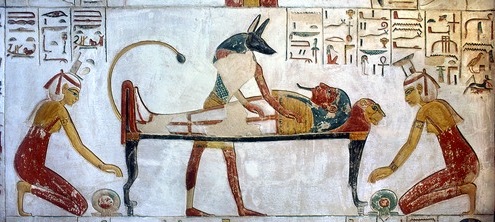
Isis and Nephtys at both extremes of the corpse with shen rings. Tomb of Siptah. XIX Dynasty. Valley of the Kings. Ancient Egypt. Photo: www.thethebanmappingproject.com

Isis and Nephtys at both extremes of the corpse with shen rings. Tomb of Siptah. XIX Dynasty. Valley of the Kings. Photo: www.thethebanmappingproject.com

But there is another very important aspect in the dead’s resurrection. We know he becomes a new born, so he needs a mother.

Coffin of Khenstefnakht from the Late Period. Inside the cover, the goddess Nut with her hair standing up. She swallows the evening sun and gives birth the morning sun. Musée Royaux d'Art et d'Histoire (Brussels). Photo: www.vroma.org

Coffin of Khenstefnakht from the Late Period. Inside the cover, the goddess Nut with her hair standing up. She swallows the evening sun and gives birth the morning sun. Musée Royaux d’Art et d’Histoire (Brussels)

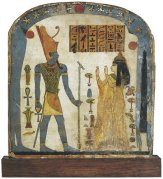
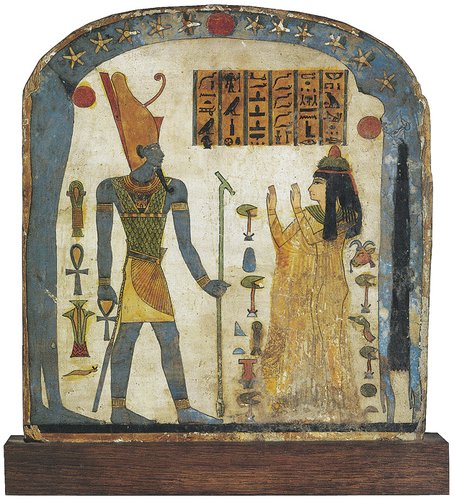
Funerary stele of Lady Taperet with an image of Nut in nwn gesture. XXII Dynasty. Musée du Louvre. Photo: www.nybooks.com

Funerary stele of Lady Taperet with an image of Nut in nwn gesture. XXII Dynasty. Photo: www.louvre.fr

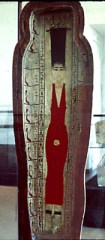
In Ancient Egypt iconography the image of the goddess Nut in the inside of the lid of the coffin was a grant for the mummy’s new life. She, as the mother of Osiris, appears in the surface extended with raised arms and disheveled hair.

We have seen that this was a way of representing the birth of Osiris. In fact, Nut, as the vault of heaven would be bended forwards with her hair falling down. In this position she would give birth Osiris (the deceased).

In the funerary ceremony the mourners with their mourning ritual helped in the dead’s resurrection, if this one was considered a new born, he also would need someone making the role of mother. The mourner in the role of Isis could be this woman who, shaking her hair forwards would reproduce the birth of Osiris (the deceased).

We all know that in a childbirth the baby first shows the crown and the head, while the feet go out in the end. If Isis (the mourner) was symbolically giving birth, the correct position in the funerary ceremony (and also in the iconography) should be at the feet of her newborn son (the dead).

Nephtys at the head of the coffin and Isis at the feet. Coffin of Thutmes IV. XVIII Dynasty. Ancient Egypt

Nephtys at the head of the coffin and Isis at the feet. Coffin of Thutmes IV. XVIII Dynasty.

In this case the role of Nephtys would have been helping her daughter’s birth and delivering the baby. That is, her mission was to be the midwife, and for that reason she always appears at the head of the mummy.

Egyptian hieroglyph of a woman giving birth. Relief from the temple of Kom Ombo. Ancient Egypt

Egyptian hieroglyph of a woman giving birth. Relief from the temple of Kom Ombo.

Summing up, the scene of the mummy (Osiris) flanked by the two mourners kneeling, Isis at his feet and Nephtys at his head, could be the image of a birth. One woman giving birth (Isis) and being assited by a midwife (Nephtys). Let’s also rememeber that Egyptian women gave birth kneeling.

Isis the mourner at the feet of Osiris. A matter of sex?


Fragment of Papyrus of Hornefer. Ancient Egypt. Photo: www.ancient.eu.com

Fragment of Papyrus of Hornefer. Ptolemaic Period. Museo Castello Sforzesco in Milan.Castello Photo: www.ancient.eu.com

Position of charaters in Ancient Egypt art is more important than we could think, because it could also hide some intentions.

The hieroglyph over the kneeling mourner in this image from the papyrus of Hornefer is not clear at all, so we cannot read her name, but thanks to her position next to the coffin, we can know she is Nephtys.

The two mourners who took care of the mummy (so the two Drty), where during the Ancient Egypt funerals the representatives of Isis and Nephtys. Those two mourning women and the two goddesses were usually represented in the same way: they accompanied the body at both extremes of the coffin, Isis at the feet of the corpse and Nephtys at the head. The point is why?

Isis and Nephtys at both extremes of the corpse with shen rings. Tomb of Siptah. XIX Dynasty. Valley of the Kings. Ancient Egypt. Photo: www.thethebanmappingproject.com

Isis and Nephtys at both extremes of the corpse with shen rings. Tomb of Siptah. XIX Dynasty. Valley of the Kings. Photo: www.thethebanmappingproject.com

We all know that in Ancient Egypt the artist had to follow the canon, not just from the aesthetic point of view (color of skins, perspective…), but also the whole composition was subjected to some rules, like the order of some scenes, what they could represent or not, or the position of some characters.

In almost all images of Isis and Nephtys with the mummy, the Egyptian artists represented them always as we described above. If this was a rule, it had to have a sense, because in Ancient Egypt art for art’s sake did not exist.

Two different ways of representing Isis and Nephtys assisting the deceased: as the two kites (tomb of Sennedjem) and as women (tomb of Nakhtamon). XIX Dynasty. Photos: www.osirisnet.net

Two different ways of representing Isis and Nephtys assisting the deceased: as the two kites (tomb of Sennedjem) and as women (tomb of Nakhtamon). XIX Dynasty. Photos: http://www.osirisnet.net

As we are in a funerary context, the explanation has to be related to the role of these two women as mourners in the funeral of Ancient Egypt. We need to look at the mourning ritual they made for contributing to the deceased’s resurrection. It was a re-enactment of the myth of Osiris and in it there were two main aspects which give sense to the position of Isis at the feet of the dead. One of these aspects is sex.

Mummy with both mourners on the extreme making the nwn gesture. Funerary temple of Seti I in Dra Abu el-Naga. Photos: Mª Rosa Valdesogo Martín

Mummy with both mourners on the extreme making the nwn gesture. Funerary temple of Seti I in Dra Abu el-Naga. Photos: Mª Rosa Valdesogo Martín

The two women in the role of Isis and Nephtys, shook their hair forwards the mummy, among other things, for reproducing the episode in which Isis put on Osiris’ phallus for giving him back his virility and conceives Horus. This intercourse would be dramatized in the mourning rite in its most human version, which is why the mourner shook her hair forwards the mummy, as if she, as a woman, would be over her husband’s body.

Isis as a kite over the corpse of Osiris. Relief from the temple of Seti I in Abydos. XIX Dynasty. Photo: www.common.wikimedia.org)

Isis as a kite over the corpse of Osiris. Relief from the temple of Seti I in Abydos. XIX Dynasty. Photo: www.commons.wikimedia.org

Usually Egyptian artists represented that coitus with Isis as a kite facing her husband Osiris and over the phallus of the mummy. When the Egyptian artist had to represent Isis as the woman and wife, the one who has sex with her husband over him and facing him, the most logical position next Osiris would be at his feet.

So, maybe Isis appears at the feet of Osiris because from there she will copulate with him.

But we have said “two main aspects”, sex is one, do you imagine which the other one is?

Codified Information in Ancient Egypt. Mourners in the Tomb of Qar?


The Egyptian tomb of Qar has in its decoration program a funerary ceremony with all the main components. However it seems that there is missing a very typical image of Egyptian funerals: the lament.

Among all the images there is no scene showing a group of mourning women as we can see, for instance, in the mastaba of Mereruka or in the adjacent tomb of Idu.

Relief of mourners, one of them pulling her frontal lock of hair. Tomb of Mereruka in Saqqara. Ancient Egypt. VI Dynasty. Photo: Mª Rosa Valdesogo Martín.

Relief of mourners. Tomb of Mereruka in Saqqara. VI Dynasty. Photo: Mª Rosa Valdesogo Martín.

But we know now that Qar (or the main artist) decide to codify or summarize the funerary rituals in the walls of his tomb. For that reason the Opening of the Mouth ceremony (the main Egyptian ritual for regenerating the mummy) seems to be represented (see posts of 13th and 22nd January), although not in an explicit way.

Dancing and clapping in fronnt of the tomb. The inscription above says: "mourning by the two acacias". Tomb of Qar in Giza. Ancient Egypt. V-VI Dynasty. Image: W. K. Simpson

Dancing and clapping in fronnt of the tomb. The inscription above says: “mourning by the two acacias”. Tomb of Qar in Giza. V-VI Dynasty. Image: W. K. Simpson

It could also be possible that something similar happened with the mourning practice. Reading at the translation of the inscriptions made by Simpson, we find that above the dancing women who are in front of the tomb (uabet building) the scribes wrote: mourning by the two acacias[1]. It is obvious that the women below are dancing and clapping hands and not mourning. And does it make sense two trees mourning?

The Egyptian word shenedjet mainly means “acacia”, but it is also the holy tree which mythically protects the tomb of Osiris[2], and in the text it is written with a dual form (shenedjety, so it refers to two. The pairing usually protecting Osiris is Isis-Nephtys, as it is proven in iconography and literature.

Could we then think that again we are facing a codified / summarized information? The expression “the mourning (made) by the two acacias” would be then referring to the image or the fact of the two mourners in the role of Isis and Nephtys mourning for Qar.


[1] Simpson, William K., The Mastabas of Qar and Idu. G 7101 and G 7102.  Vol. 2. Boston. 1976, p. 6

[2] Wb IV, 521, 4

“Reading” the Ancient Egypt Funeral in the Tomb of Qar.


In Ancient Egypt art  not always all scenes of a decoration were connected. But when it happens, it is important to guess the correct order of them and “read” the story.

On January 13th we saw how a small scene from tomb of Qar could be a summarized or codified representation of the Opening of the Mouth ceremony. But this is not the only surprise of this Egyptian tomb.

According to Simpson the normal order of the funerary scenes in the north wall was, following a more occidental logic, from the top downwards; so from left to right in the upper register and from right to left in the lower one.  The sequence would start with the three figures of the Drt mourner, the wt (embalmer) and would end with the arrival to the building on the left, which was considered as the embalming place[1]. However, the Egyptian logic in art was different from ours.

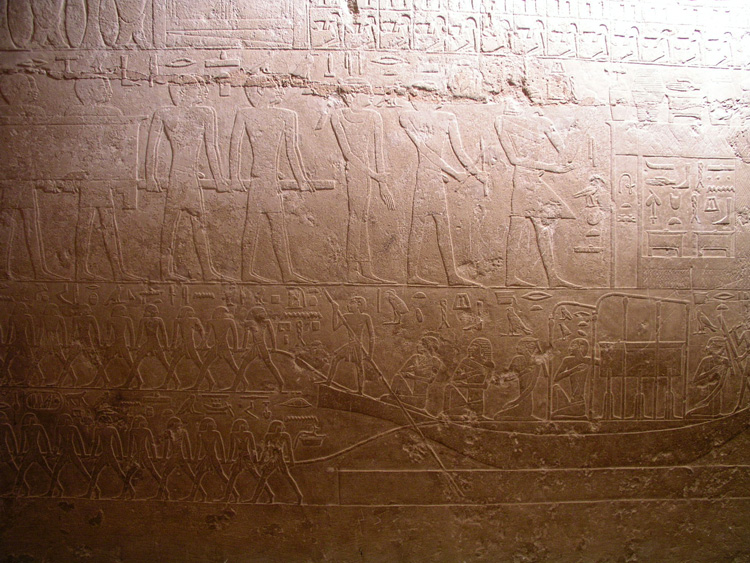
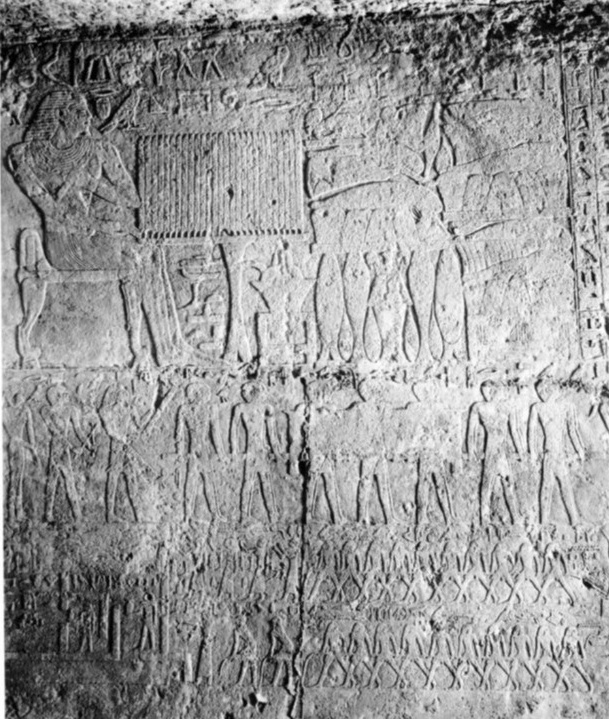
Scene of an Ancient Egypt funerary procession. Tthe tomb of Qar. V-VI Dynasty. Giza. Image from W. K. Sympson.

Scene of the funerary procession in the tomb of Qar. V-VI Dynasty. Giza. Image from W. K. Simpson.

The word identifying the building on the left is uabet , which means a “pure and clean place”[2], but not necessarily just for “embalming”. We also know that uabet from the Middle Kingdom also meant “tomb”[3]. Maybe the building in the scene was the Qar’s tomb. If we think like that, the decoration then maybe should be read in a different direction; in fact sometimes Egyptian artists designed a decoration from down to top.

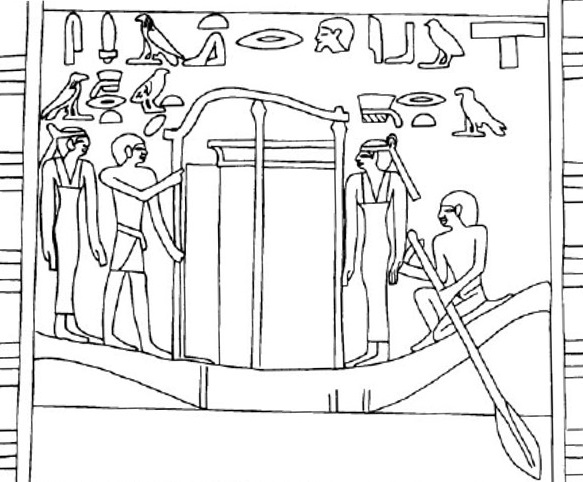
The sequence would start at the right of the lower register. The cortège moves the coffin on the boat until the uabet building, the tomb (this would be a reproduction of the Egyptian mythical voyage to Abydos), the burial place and also the embalming place. We notice that the corpse is being accompanied by the two Drty mourners with short hair, the wt (embalmer) and the lector priest.

Ancient Egypt funeral. The coffin on a boat is being moved to the tomb. The mourners Drty are at both extremes of the coffin, in the prow sit the lector priest and the embalmer. Tomb of Qar. Giza

The coffin on a boat is being moved to the tomb. The mourners Drty are at both extremes of the coffin, In the prow sit the lector priest and the embalmer. Tomb of Qar in Giza. V-VI Dynasty. Photo: http://www.archaeology-archive.com

In the upper register the artists represented what it was happening inside the uabet building. There are always three main figures: the lector priest, the wt (embalmer) and the Drt mourner. And their presence allows us to divide the upper register in three scenes:

1)      They three and the coffin transport. That would be the staff and the mummy getting into the tomb.

The Drt mourner, the embalmer and the lector priest in front of the w3t. Tomb of Qar in Giza. V-VI Dynasty. Photo: www.allposters.com

The Drt mourner, the embalmer and the lector priest in front of the w3t. Tomb of Qar in Giza. V-VI Dynasty. Photo: http://www.allposters.com

2)      They three inside the w3t. This Egyptian word meant “way” or just “a part of a place[4]. Inside the w3t there is:

  • The tools of the Hmt (artisans),
  • The tools of the lector priest.
  • All necessary for the purification of the feeding[5]. It should refer to the final food offerings.
  • The icon shows that in this w3t there is water.

All these four points refers to what the staff needed for the Opening of the Mouth ceremony, as we can see in some tombs of the New Kingdom.

Funerary practice in the mastaba of Qar with lector priest, embalmer and mourner Drt; the scene is closed by two images of an ox. V-VI Dynasty. Giza. Ancient Egypt. Image: W.K. Sympson.

Funerary practice in the mastaba of Qar with lector priest, the embalmer and the mourner Drt; the scene is closed by two images of an ox. V-VI Dynasty. Giza. Image: W.K. Simpson.

3)     They three during the D3t r3 and the slaughter of the ox. We have already seen that this image could be a way of representing the Opening of the Mouth ceremony.

Summing up, the decoration of the north wall in the tomb of Qar could be read from down to top. The artist would have “narrated” the arrival of the funerary procession to the tomb, the resurrection rites practiced on the mummy and for that reason finally at the final top of the wall Qar sits alive in front of his funerary offerings.

Qar sits in front of his funerary offerings. Scene at the top of the north wall. Funerary ceremony below. Ancient egyptian funerals. Tomb of Qar in Giza. V-VI Dynasty. Photo: W. K. Simpson.

Qar sits in front of his funerary offerings. Scene at the top of the north wall. The funerary ceremony is below. Tomb of Qar in Giza. V-VI Dynasty. Photo: W. K. Simpson.


[1] Simpson, William K., The Mastabas of Qar and Idu. G 7101 and G 7102.  Vol. 2. Boston. 1976, p. 5

[2] Wb I, 284

[3] Wb I, 284, IV

[4] Wb I, 248, II

[5] This inscription deserves special attention, because it is not too clear. It seems to refer to purification (abu) of the “feeding” (D3t r3).

Two Mourners in the new discovered Tomb of the Egyptian King Senebkay?


Two mourners in the new discovered tomb of the Egyptian King Senebkay?

That was my first thought when I saw yesterday the new about the recent discovery of the university of Pennsylvania in Abydos. The tomb of King Senebkay, probably dating from XIII Dynasty, built in a simple way and, according to archaeologists, with reutilised blocks, is not too well preserved.

The painted decoration that it remains in this Ancient Egypt grave is very scarce and also quite simple. On a white background some images are visible, like the King’s cartouche, the winged sun disk and some female figures.

Decoration at the funeral chamber of Pharaoh Senebkay in Abydos. XIII Dynasty. Ancient Egypt. Photo: www.terrantiqvae.com

Decoration at the funeral chamber of Pharaoh Senebkay in Abydos. XIII Dynasty. Photo: http://www.terrantiqvae.com

The scene which attracted our attention was the one at the last chamber. It is very typical Egyptian funerary scene. On the top of the wall a winged sun disk (image of Horus) is over a painted false door, which is crowned by the heker frieze and contains two Udjat eyes. This icon is very common in Middle Kingdom coffins; the eyes, in the Ancient Egypt belief are the deceased’s connection with the world of the living, so this part of the tomb symbolises the limit between this world and the Hereafter. At both sides of the false door two standing women appear as the only human beings.

According to Joseph Wagner (responsible of the works), the bad conditions of the tomb could be a proof of the bad economical situation of Egypt at that period (Second Intermediate Period). If so, it would make sense the lacking decoration of the tomb (let’s remember that itis about a Pharaoh’s tomb). But this premise would be important. If the decorative programm was limited, the artists had to include in the tomb just the essential for granting the Senebkay’s resurrection. Obviously, the false door and the Udjat eyes as the meeting point between the world of the living and the Hereafter were necessary. And what about those two women?

Let’s emphasize some points:

These two women appear alone, with no other human figures, so they were important.

These two women stand at both sides of the false door, in the same way Isis and Nepthys stand later on at both extremes of the coffin and/or the mummy.

These two women are at the connection point between the world of the living and the Hereafter. It is the place were the Egyptian mummy comes back to life after the resurrection ritual. We have seen all along our research that the two mourners in the role of Isis and Nephtys were a very important part in the resurrection of the deceased.

These two women wear around their wrists apparently the hieroglyph of the seal. We still do not know really how to interpret that, but at first sight one image came to mind: the one of Isis and Nephtys in the New Kingdom scenes at both extremes of the coffin holding the shen ring, as a symbol of eternity. The seal and the shen ring hieroglyphs could be both determinative for the Egyptian word djebat (Wb V, p. 566), which meant “signet-ring“, so the seal in a ring worn by the Pharaoh.

Isis and Nephtys at both extremes of the corpse with shen rings. Tomb of Siptah. XIX Dynasty. Valley of the Kings. Ancient Egypt. Photo: www.thethebanmappingproject.com

Isis and Nephtys at both extremes of the corpse with shen rings. Tomb of Siptah. XIX Dynasty. Valley of the Kings. Photo: http://www.thebanmappingproject.com

These two women had to be there for granting the resurrection of the king. The question is who were they? There is an inscription next to them, which probably will shed light on that issue. Meanwhile let’s also think that the tomb is located in Abydos, place were the Myth of Osiris was specially important. Had the Egyptian artist represented the Osiris (so Senebkay) resurrection as summarized (or even cheap) as he could?

Aside

Looking at the walls of Egyptian tombs belonging to the Old Kingdom we are aware that artists at that period of the Egyptian history represented funerary ceremony not in such an explicit way as they did later on. The mastaba of Qar is a good example of it; in the north wall of court C there is a scene of the funerary procession where we can perfectly see all the personnel taking part in the ceremony, but whose role is not always too clear. We can see the two mourners Drty (the professional mourners) with short hair accompanying the coffin, the wt priest (embalmer), the Xr-Hb (lector priest) and the rest of the funerary staff. But do we really know what are they doing?
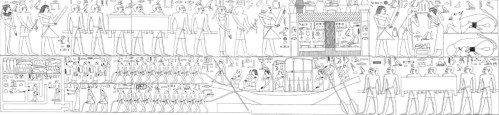
Scene of an Ancient Egypt funerary procession. Tthe tomb of Qar. V-VI Dynasty. Giza. Image from W. K. Sympson.

Scene of the funerary procession in the tomb of Qar. V-VI Dynasty. Giza. Image from W. K. Sympson.

I just would like to focus on one small scene of the whole composition where one Drt (“kite”) without mane appears with the wt priest or embalmer. Both are facing each other and uttering some words; behind the embalmer stands the lector-priest. An altar with food offers stands between them and the inscription over there says: “D3t r3”. Looking at their gesture (the hand on the mouth) we could suppose that it is just describing it. But, makes that sense?

Detail of the relief in the tomb of Qar. The lector priest, the embalmer and the mourner Drt in the Ancient Egypt funerary ceremony for the deceased. V-VI Dynasty. Giza.

Detail of the relief in the tomb of Qar. The lector priest, the embalmer and the mourner Drt in the funerary ceremony for the deceased. V-VI Dynasty. Giza.

The expression D3t r3 was also used in Ancient Egypt for referring to feeding[i]. It was the way of expressing the fact of taking the mouth to the food, as when the mother takes the baby to her breast for nursing him. Taking into account that the inscription is over the altar with food, it could be more logical to think of this meaning. So, they both would be feeding (and therefore giving life) to the dead.

But that is not all, what elements do we have for interpreting the scene in a more conscious way?

1)      The scene happens during the funerary ceremony, so the first personage we have to think of is the deceased. And we already know that in the Ancient Egypt belief he was considered as a new born. The rebirth was a new birth, so the mummy became a foetus in the womb and he came back to life after the whole gestation. After that his first food would be the breast milk. In this context the expression D3t r3 would be full of meaning.

2)      We see the presence of a Drt mourner, which played the role of Isis. In later Egyptian documents, it is more usual to find two Drty, as the representatives of Isis and Nephtys. Both played a very important role making a special mourning ritual; in it both shook and pulled their hairs reviving again the episode of the myth of Osiris in which the corpse of the god was revived by Isis. She put herself as a kite over her husband’s phallus and gave him back his virility. It is very important to notice in the image her short hair, since, according to our research, we consider that, after the mourning ritual, her hair was cut. So, for the Egyptian artist to represent these mourners with the short hair was the way to indicating that they were not common mourners, but the representatives of Isis and Nephtys and the women taking part in the deceased’s resurrection.

3)      The embalmer (wt) is very present during the funerary procession. The embalmer was the responsible of the mummification and in the myth of Osiris this was the role of Anubis. Once every limb from the god’s body were collected, Anubis recovered the mummy assembling each member, afterwards Isis with her magic recovered all vital faculties and Osiris came back to life.

4)      The lector priest was always present in Ancient Egypt funerals reciting all sacred texts and leading the ceremony. In the Qar’s tomb he is the third member of the staff officiating during the rite.

So, at first sight we can assure that this small scene is indicating a ritual made for the mummy’s restoration. But we can go on farther.

Closing the register we find the image of two tied[ii] oxen. It seems quite logical to think about just one, alive in the upper half and already dead in the lower one. The slaughter of an ox is a practice made in all funerals. It was connected with the sacrifice of the sethian victim and this rite was a reproduction of the dead of Seth in the myth of Osiris.
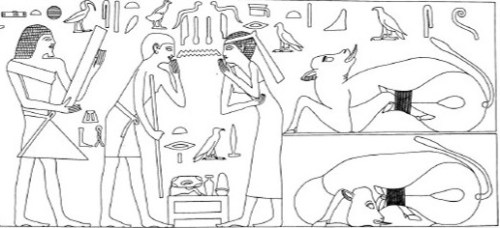
Funerary practice in the mastaba of Qar with lector priest, embalmer and mourner Drt; the scene is closed by two images of an ox. V-VI Dynasty. Giza. Ancient Egypt. Image: W.K. Sympson.

Funerary practice in the mastaba of Qar with lector priest, embalmer and mourner Drt; the scene is closed by two images of an ox. V-VI Dynasty. Giza. Image: W.K. Sympson.

All components of this scene refer to practices made mythically for restoring the corpse of Osiris, giving him back to life and avenging his death; and everything supervised by the lector priest. All that is what happened in the Opening of the Mouth ceremony, the main Ancient Egypt rite for granting the resurrection of the dead.

Summing up, this small scene was very important in the decorative program of Qar’s tomb, it had to be there for assuring the Qar’s resurrection in the Afterlife. But the Egyptian artist in the Old Kingdom had to find the way of representing it in a discrete (even codified) way.


[i] Wb V, 514.

[ii] As it is indicated in the hieroglyphs
Aside

A new tomb has been discovered in Egypt by the Waseda University expedition.

This Egyptian tomb, dating from the Ramesside period, belongs to Khosuemheb and it is located in the Khokha cementery. Interesting for our subject is a wall containing a scene of the funerary procession to the tomb and the final Opening of the Mouth Ceremony.

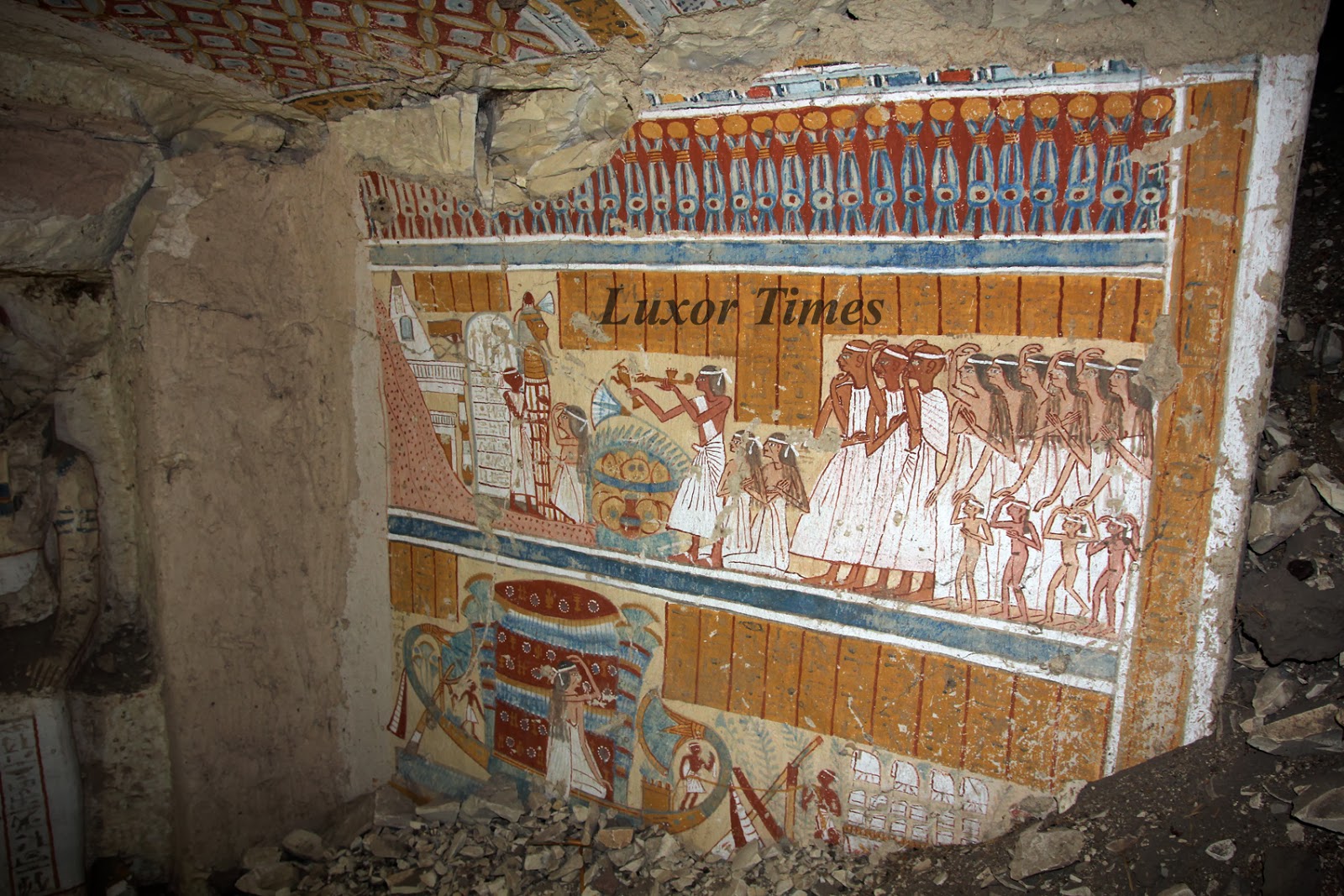
Scene of the Funerary Ceremony with the procession and the Opening of the Mouth Ceremony. Tomb of Khonsu-em-heb in Khoka (Luxor), Egypt. Ramesside Period. Photo: www.luxortimesmagazine.blogspot.nl

Scene of the Funerary Ceremony with the procession and the Opening of the Mouth Ceremony. Tomb of Khonsu-em-heb in Khoka (Luxor). Ramesside Period. Photo: http://www.luxortimesmagazine.blogspot.nl


From down to top we can see how the coffin is being transported on a boat, next to it a kneeling mourning woman cries the lost of the deceased. Although we cannot read yet the inscription, and taking into consideration what we have seen all along our research, we guess it is about his wife.

On the upper register a group of mourners appear making the usual Egyptian mourning gestures; it is interesting to notice the presence of men and young naked girls, but also the presence of two kneeling women who also mourn, but kneeling and in a more quite attitude.

Finally, in the Opening of the Mouth Ceremony, the standing mummy is in the middle of its resurrection process. The deceased is being assited by three main people: two priests (probably the sem priest and the lector priest) and the mourner.

Summing up, the tomb of Khonsu-em-heb seems to show a summarized version of the funerary ceremony, in which the three types of moutners are present:

The common mourners in a group, crying and screaming.

The deceased’s wife regretting her husband’s death.

The professional mourner helping in the final resurrection.

It is sure that there will be much more to say about this tomb and its decoration, but this is our first reflection just at first sight.

Aside

Shaving the Mourners in Ancient Egypt during the Old Kingdom.

We have already seen that there are proves of a practice in Ancient
Egyptian funerals of cutting and then offering the hair of the two Drty (”kites”), who made a mourning ritual in the role of Isis and Nephtys. Archaeological remains appear as the most numerous and they increase as history advances[i]. Anyway, again the New Kingdom offers more indices of it, with many scenes where these two mourning women (Drty) appear with short hair:

  • Tomb of Sobek-Mose in el-Rizeikat (XVIII Dynasty)
  • Tomb of Renni in el-Kab (XVIII Dynasty)
  • Tomb of Pahery in el-Kab (XVIII Dynasty
  • Tomb of Rekhmire in Gourna (XVIII Dynasty)
  • Tomb of Sebekhotep in Gourna (XVIII Dynasty)
  • Tomb of Nefersekheru in Zawyet Sultan[ii] (XVIII-XIX Dynasty)
Funerals of Sobekmose with the two mourners (or two kites) with no mane of hair. Relief from the tomb of Sobekmose in el-Rizeikat. XVIII Dynasty. Photo: www.blog.naver.com

Funerals of Sobekmose with the two mourners (or two kites) with no mane of hair. Relief from the tomb of Sobekmose in el-Rizeikat. XVIII Dynasty. Photo: http://blog.naver.com/PostView.nhn?blogId=yjm3198&logNo=20127186648&categoryNo=16&viewDate=¤tPage=1&listtype=0


As we can see all these examples come from proximities of Luxor, except the one from Nefersekheru, which is located 10 km in the south of Minya in the Middle Egypt. So, at first sight we could imagine that cutting the hair of the two mourners Drty could be a practice made in the funerary ceremony of Upper Egypt and very usual during the New Kingdom. Does it mean that this practice becomes popular as time goes by in the south of the country? Or again does it come about by chance?

The Coffin Texts of the Middle Kingdom gives us indices of cutting the mourning women’s hair in Ancient Egypt funerals, so we have to suppose that this was not a new practice included suddenly in the sacred texts, but something already done previously and already inside the Egyptian religious belief.

Searching among the Old Kingdom iconography there are two much known tombs, the mastabas of Qar and Idu (V-VI Dynasty) and both located in Giza. The decorative program in these two Egyptian mastabas included scenes of the funerary procession and the tomb of Idu offers also a very interesting scene of mourning men and women who pull their front lock of hair as proof of desperation and sadness. However, as it happens in the most part of Old Kingdom iconography, in both cases it is not about a complete and explicit funerary ceremony as we can see later in the New Kingdom.

What it is important for us is that on both mastabas the two Drty (“kites”), who were the representatives of Isis and Nephtys during the Ancient Egypt funerals, appear with short hair. In Qar’s tomb a complete procession to the embalming place shows always the two Drty with short hair and the emblamer (wt) always present.

Scene of the funerary procession from the mastaba of Qar in Giza (Egypt). V-VI Dynasty. The two Drty with no mane of hair are at both extremes of the coffin. Image from Simpson, W.K., The Mastabas of Qar and Idu in Giza. G 7101 and 7102. Boston, 1976, fig. 24

Scene of the funerary procession from the mastaba of Qar in Giza. The two Drty with no mane of hair are at both extremes of the coffin. V-VI Dynasty. Image from Simpson, W.K., The Mastabas of Qar and Idu in Giza. G 7101 and 7102. Boston, 1976, fig. 24; Photo: http://www.bridgemanart.com

In Idu’s mastaba again just a few scenes of the procession show the two mourning women (Drty) with short hair accompanying the coffin join with the embalmer (wt).That would be a proof of the practice of cutting the mourner’s hair also in the Old Kingdom.

Scene of the funerary procession from the mastaba of Idu in Giza. The two Drty appear with short hair. VI Dynasty. Image from Simspon, W. K., The Mastabas of Qar and Idu. G 7101 and 7102, Boston, 1976, fig. 35

Scene of the funerary procession from the mastaba of Idu in Giza. The two Drty appear with short hair. VI Dynasty. Image from Simspon, W. K., The Mastabas of Qar and Idu. G 7101 and 7102, Boston, 1976, fig. 35

But, when observing these two tombs we realise that there are much doubts coming to our mind related to the funerary ceremony and the mourning ritual.

Are the Drty mourners with no mane of hair from the beginning of the Egyptian funerals as they appear in these scenes?

Is that decoration representing just the procession to the embalming place?

Are we reading those scenes in the correct order?

We will try to find the answer in following posts….


[i] It is also true that the remains from the Late Period come from a unique necropolis with ten tombs having hair offerings.

[ii] Also known as Zawyet el-Maiyitin

Nut with disheveled hair in the Coffin of Nefer-Renepet


Recently Branislav Andelkovic and Jonathan P. Elias published an article about the wooden coffin of Nefer-renepet from Akhmin  donated by E. Brummer to the Museum of Belgrade (Ernest Brummer and the Coffin of Nefer-Renepet from Akhmin, Issues in Ethnology and Anthropoly, n.s., Vol. 8, Is. 2, 2013, pp 565-584) http://www.anthroserbia.org/Content/PDF/Articles/60b0534bab3c41509c430f29feea8df3.pdf

Coffin of Nefer-Renepet. XXX Dynasty. Museum of Belgrade. Photo: www.anthroserbia.org

Coffin of Nefer-Renepet. XXX Dynasty. Museum of Belgrade. Photo: http://www.anthroserbia.org

This Egyptian coffin had been dated somewhere between the XXII and the XXV Dynasties. The authors show thanks to the decoration and the writings that the coffin of Nefer-Renepet might belong to the XXX Dynasty. Interesting for us is the image of Nut into the cover, with her rising arms and her standing up hair. This image was one of basis for dating the coffin so late in the history of Ancient Egypt, so the authors related it to many other image of Nut in that way at that period.

He point for us is that the authors reefer to  Brunner and Pitsch (1984), who linked this late image of Nut to the spells 638 and 1607 of the Pyramid Texts: ”Thy mother Nut has spread herself over thee, in her name of “She of Št-p.t“. According to them, this image of Nut has a protective meaning, the goddess would protect the deceased during the hours of the night and the day.

We do not deny that this was a part of the function of Nut forwards the dead. However, as long as we have seen in our research, the image of Nut with disheveled hair inside the cover of the coffin was directly related to spell 2171 of Pyramid Texts, which in a very precise way describes this image of Nut:” Nut has given her arms to thee, N., she of the long hair, she of the hanging breasts”. In fact, the spell describes perfectly the image of Nut in the coffin of Hornedjitef from the Ptolemaic Period (under the reign of Ptolemy III).

Coffin of Hornedjitef from Ptolemaic Period.

Coffin of Hornedjitef. Ptolemaic Period. British Museum. Photo: http://www.britishmuseum.org

This iconography of Nut bended forwards and with her hair falling down and appeared also lately in the history of Ancient Egypt in the outer part of some coffins or even in some stelae.

Funerary stele of Lady Taperet with an image of Nut in nwn gesture. XXII Dynasty. Musée du Louvre. Photo: www.nybooks.com

Funerary stele of Lady Taperet with an image of Nut in nwn gesture. XXII Dynasty. Musée du Louvre. Photo: http://www.nybooks.com

The Egyptian goddess had the two roles, on one hand she was the protective sky over the dead, but on the other hand Nut was the mother, who bends her body, whose hair falls down and who gives her breast to the deceased. Inside the coffin this image was the symbol of maternity and the coffin became the womb, so it granted the rebirth of the corpse.

It is also interesting to notice the orientation of the image of Nut inside the cover of these coffins; her face would coincide with the mummy’s face, while we can see the cavity for the feet. His position would recreate the birth, the first part of the body going out from the womb is the head, so the deceased is not facing the goddess, but Nut is receiving her new born baby.