Category Archives: 08. REFLECTIONS

The Egyptian Verbs for “Disheveling Hair”


Ancient Egypt language had many different words for expressing the disorder in a long female hair.

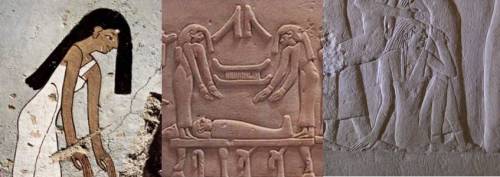
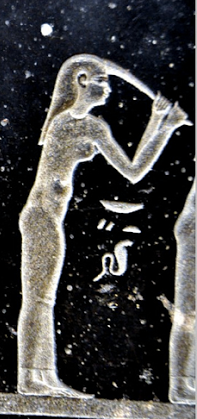
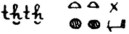
We have seen that in the funerary context the most used one was the verb nwn, which literally meant “to dishevel the hair over the face”,nwn gesture of disheveling hair in Ancient Egypt that is, to shake the mane of hair forwards and cover the face with it.  So the verb refers to the fact of extending the hair upside down. That was the gesture the mourners did during their mourning ritual in the Egyptian funerals. The verb is documented already from the Old Kingdom and closely realted to the funerary context.

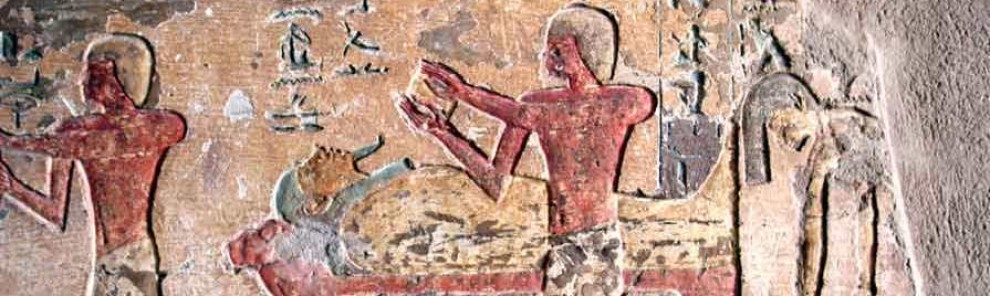
All during this blog we have seen how the nwn gesture was made by the common mourners during the cortège, but overall by the two professional mourners in the role of Isis and Nephtys during the resurrectional rites. Making the nwn gesture those two women evoked some crucial moments of the Myth of Osiris, as the copulation beweet Isis and Osiris, when Isis as a kte produces vital breath with her wings or the maternity of Osiris.


Another Egyptian word was tejtej (also written with the determinative of hair) tejtej-dishevel hair in Ancient Egyptwhich meant the tangled hair. According to Erman and Grapow, it was documented from Middle Kingdom and the sense of this verb was related to disorder. It was also applied to the fact of having the ideas mixed-up, so producing a state of confusion. The enemies of Egypt were as well tejtej when captured, since they were put all together in a disordered pile.
Isis as a kite over the corpse of Osiris. Relief from the temple of Seti I in Abydos. XIX Dynasty. Photo: www.common.wikimedia.org)

Isis as a kite over the corpse of Osiris. Relief from the temple of Seti I in Abydos. XIX Dynasty.

It is interesting to notice that chapter 17 of the Book of the Dead, which relates the copulation of Isis with Osiris, uses the verb tejtej for referring to the disordered hair of isis during her copulation with Osiris (Urk. V, 87). It still gains sense when we realise that tejtej is a reduplicated form from the Egyptian verb tej, which meant “get drunk”. And one epithet of Isis from the New Kingdom was “Lady of the Inebriation”. So, aluding to this state of confusion, which in the Myth of Osiris would be the moment of the copulation.

The verb sps has a very similar meaning as nwn, it was used for the tousled hairsepes- dishevel hair in Ancient Egypt, the main difference is that sps was documented from the New Kingdom, concretely in the Book of the Dead, while nwn is an existing verb for disheveled hair from the Old Kingdom. On the other hand it seems quite sure that nwn was the verb for referring to the concrete gesture of covering the face with the hair.
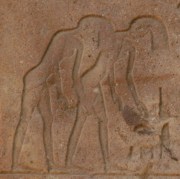
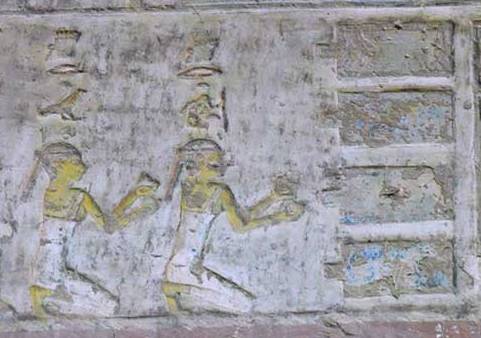
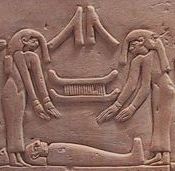
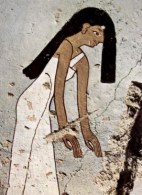
Two women shaking their hairs. Relief from the Red Chapel of Hatshepsut in Karnak. Photo: Mª Rosa Valdesogo Martín

Two women shaking their hairs in the Festival of the Valley. Relief from the Red Chapel of Hatshepsut in Karnak. Photo: Mª Rosa Valdesogo Martín

We have also to notice that the verb sps was later on also written with the determinative of a dancing person and it meant “dance”. sepes- dishevel hair in Ancient Egypt

At that point we could think that the verb sps could refer to the tousled during some dancing. If so, it comes tour mind those dances made by women during the Festival of the Valley or the Heb Sed. In them those dancers shook their hair forwards and disheveled it on her faces as symbol of renewing.

For the moment we cannot give many conclusions, but we know that the original word related to disheveled hair was nwn, as the gesture of shaking hair forwards by the mourners in the funerary ceremony.

In the Middle Kingdom appears the verb txtx, apparently evoking the chaos and disorder of a tousled hair and applied to the copulation of Isis and Osiris.

From the New Kingdom the verb sps is another way of referring to disheveled hair, although probably taken from ritual dances in which the dancing women made the nwn gesture of shaking hair forwards.
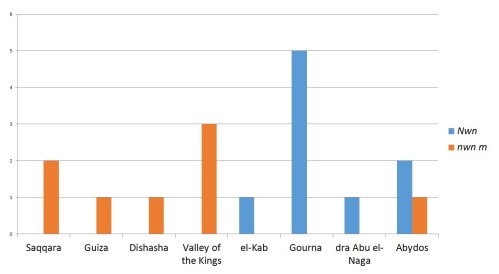
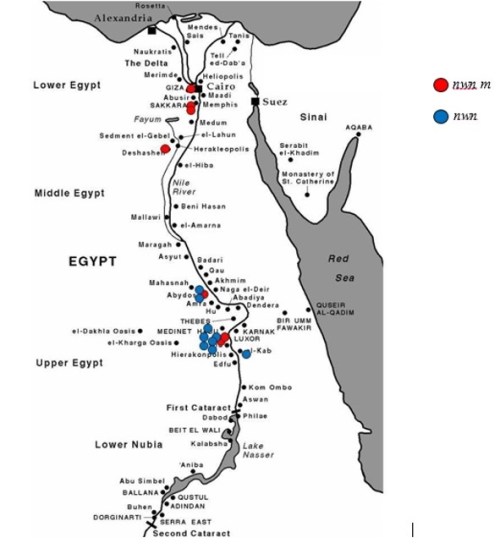
Open Reflections on Mourning Ritual in Egyptian Geography.


What about considering the iconography from the geographical point of view?  If we order in a map of Ancient Egypt the scenes we have found of mourning women that is what we have:Hair in Geography

The resulting map is the following:

Map hair

It seems that the nwn m gesture of pulling the front lock of hair belonged more to the Lower Egypt, while the nwn gesture of shaking hair was more habitual in the Upper Egypt. The exception was the royal tombs of New Kingdom, where the artist included also scenes of mourners (Isis and Nephtys or mourners of the Hereafter) pulling hair. So many questions come now to mind:

  • Did the nwn m gesture come from the north?
  • Did the nwn gesture have its origin in Upper Egypt?
  • Had the nwn gesture its origin in the Myth of Osiris? And was it typical from Abydos?
  • Were both gestures from Abydos and nwn m was extended to the north, while the nwn was extended to the south?
  • Did the election of one or another gesture depend on the place the burial took place?
  • Was the nwn m gesture introduced from the north in the royal funerary habits of New Kingdom?
  • While mourners pulled and/or shook their hair in Egyptian funerals, what happened in Nubia?

As we can notice, the matter is still full of questions with no answer. Many doubts come to our mind and we need to study deeper, slowly and with more documents.

Shaking, Pulling, Cutting and Offering the Hair in Ancient Egypt Funerals.


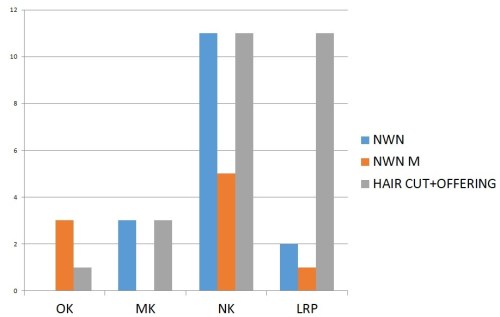
If we take a look at all documents compiled by category the results are these ones:shaking, pulling, cutting and offering

There are more examples of these women shaking their hair forwards than pulling their front lock of hair and it seems quite safe to affirm that in Ancient Egypt there was the habit of cutting and offering hair to the deceased. destacada 24de junio

We could conclude that Egyptian mourners shook more their hair than pulled it before cutting it, but it would not be precise, because archaeology and ancient history are not exact sciences and we just count on the documents the chance has preserved.

From the chronological point of view it seems that the New Kingdom has more activity, although it is obvious that it comes from the amount of examples of decoration it remains.shaking, pulling, cutting and offering together

But anyway, still some questions come to our mind related to shaking or pulling hair:

  • Was really the nwn m gesture the main one during the Old Kingdom?
  • Was the nwn gesture more in vogue from the Middle Kingdom on?

If both gestures coexisted, was still shaking hair the preferred one?

Open Reflections on Cutting and Offering Hair in Ancient Egypt.


About the proof of a practice of cutting and then offering the hair, archaeology appears as the most numerous and increasing as history advances. gráfico Cutting&Offering Hair

Anyway, the remains from the Late Period come from a unique necropolis with ten tombs having hair offerings. But, again the New Kingdom has more indices of it, with many scenes where mourning women appear with short hair.

The two Drty (two kites), offering nw vases to the four pools. Relief from the tomb of Pahery in el-Kab. XVIII Dynasty. Photo: www.osirisnet.net

The two Drty (two kites), offering nw vases to the four pools. Relief from the tomb of Pahery in el-Kab. XVIII Dynasty. Photo: http://www.osirisnet.net

Does it mean that this practice becomes popular as time goes by? Or again does it come about by chance? If the Coffin Texts of the Middle Kingdom give us indices of cutting the mourning women’s hair we have to suppose that this was not a new practice included suddenly in the sacred texts.

Open Reflections on Pulling Hair in Ancient Egypt .


The nwn m gesture of pulling the front lock of hair.

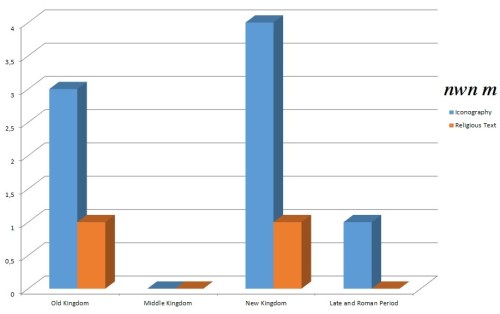
As we can see in the graphic here below the nwn m gesture of pulling hair is very present in the Old Kingdom, while we have no documents of it from the Middle Kingdom. It appears again later and especially strong in iconography. Documents from the Late Period on are less.

gráfico nwn m

Which ideas can we take from?

Nephtys pulling her front lock of hair. Detail from the sarcophagus of Nesshutefnut from the Ptolemaic Period. Kunsthistorisches Museum Wien.  www.khm.at

Nephtys pulling her front lock of hair. Detail from the sarcophagus of Nesshutefnut from the Ptolemaic Period. Kunsthistorisches Museum Wien. http://www.khm.at

  • If we have to take notice just of the data, we could understand that the nwn m gesture disappears during the Middle Kingdom for appearing again in the New Kingdom, but does it make sense? We think the answer is no. In this case we guess we have to hold chance responsible again for it.
  • Maybe the point is that such a sacred practice had not an orthodox way of being expressed, or in religious texts, or in iconography. Once in the New Kingdom the decorative activity gets so intense and sacred texts increase little by little religious and artistic collectives establish some rules or some principles. From that moment on we can distinguish between the common mourners and the professional ones, both making similar gestures, but with different meanings and in different moments of the funerary ceremony.

Open Reflections on Shaking Hair in Ancient Egypt.


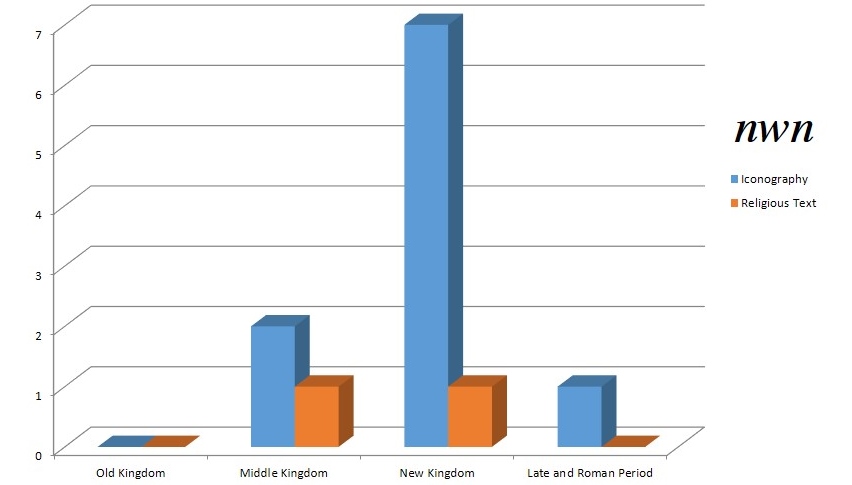
If we organise all the data in a graphic, we can more easily make some reflections for proving that the matter is still too far of being closed. Let’s see what we have about the nwn gesture of shaking hair forwards.
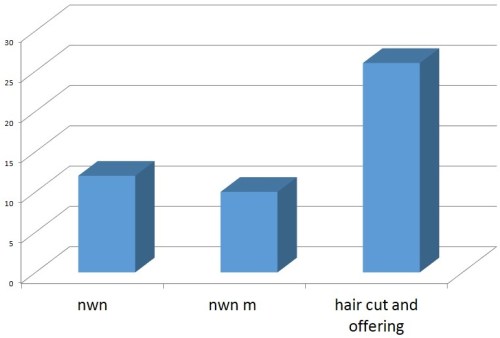
grafico nwn

    If we just look at the evolution we see that there is no trace of an explicit nwn gesture in the Old Kingdom. It seems that during the Old Kingdom the normal practice for mourners (the common ones and the two representatives of Isis and Nephtys) was to pull the hair (nwn m), not to shake it (nwn). This last one appears in documents from the Middle Kingdom, and the New Kingdom is the most prolific period, mainly in iconography. Does it mean something?

  • Was the nwn gesture of shaking hair sm3 forwards developed sometime before the Middle Kingdom; let’s remember that in XI Dynasty it is already entirely developed, as the stele of Abkaou proofs in the Festivity of Osiris.

    Detail of the stele of Abkaou in the Louvre Museum. XI Dynasty. Photo: www.commons.wikimedia.org

    Detail of the stele of Abkaou in the Louvre Museum. XI Dynasty. Photo: http://www.commons.wikimedia.org

  • Could we think that the nwn gesture was something that belonged just to the Festivity of Osiris? And later on it was included in the funerals of common people?
  • Maybe it has been a matter of pure luck and documents have not preserved (or have not been yet discovered) for knowing that the nwn gesture was also made by the two professional mourners in the role of Isis and Nephtys during the Old Kingdom. In fact the Pyramid Texts say they pull their hair sm3, not their frontal lock of hair swt. Could it be a trace of the nwn gesture in the professional mourning ritual at that time?
  • On the other hand, the corpus of scenes the artists had for the private tombs of the Old Kingdom did not include images of the funerary ceremony nor of the Opening of the Mouth ceremony. So, the nwn gesture could be made in the mourning ritual of the Old Kingdom, but we cannot see it because it was not represented.

Data Collection on Mourning Hair in Ancient Egypt.


We have seen all along this work many documents showing an Egyptian mourning ritual during funerals. Mourning women shook and/or pulled their hair, the common mourners during the cortège and the two mourners in the role of Isis and Nephtys in a precise moment of the Opening of the Mouth ceremony. But, was the reconstruction we have made of the funerary ceremony the same in every period of the history of Ancient Egypt and in every Egyptian city? Did the Egyptian mourners all over the country the same gesture with their hair?

DATA COLLECTION

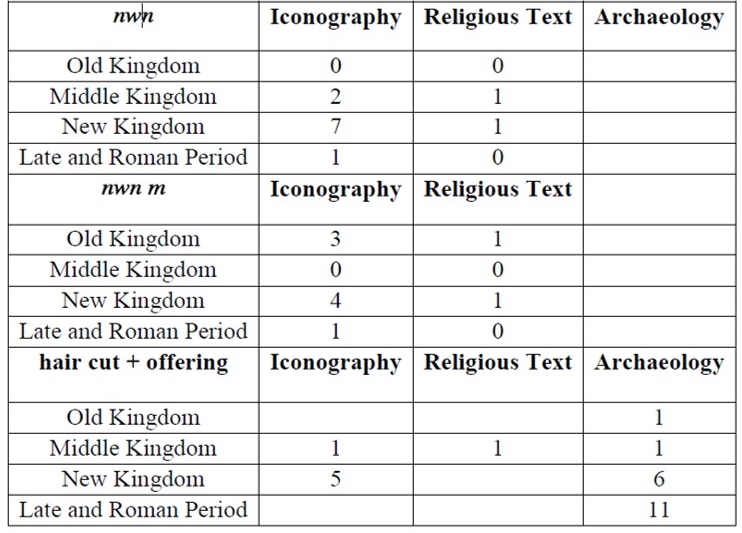
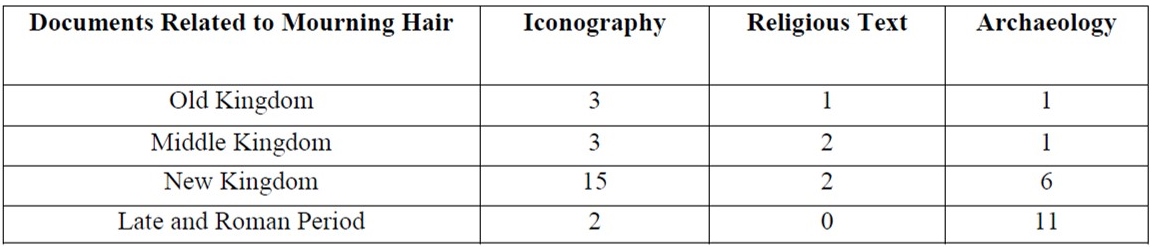
Let’s compare chronologically the documents related to mourning women and the hair we have worked with. First we will compile in figures all the data about the nwn and nwn m gestures and about the haircut and offering and we will order them:nwn (2)

If finally we collect chronologically all the information, this is the result:

hair

According to that, the New Kingdom is the period of Egyptian history with a bigger legacy about mourning rites, especially in iconography, does it mean that in that moment the mourning ritual was more consolidated than before? If so, the latest period’s archaeological remains could make us think that the hair offering was a commoner practice in Greco-Roman times. No, things are not so easy.

Secular Mourning vs. Ritual Mourning. An Egyptian Custom.


We have seen Egyptian mourners, with Egyptian tears, shaking and pulling Egyptian hair and crying for an Egyptian corpse. But crying is spontaneous human expression, so mourning is not an isolated Egyptian practise; it is also a common behaviour in many other cultures, even nowadays it is still an important way of expressing desperation and sadness in case of death or any kind of disaster.

We have tried to look for similar examples of mourning in some other cultures near Egypt and more or less contemporary. We have found in some cases some coincidences, but also big differences.

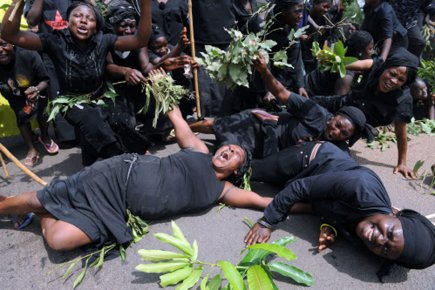
In many African areas, women mourn in the same way Egyptian women did. They scream, lie down on the ground, and tear their clothes. But, apparently nothing is done with the hair.

Mourning woman when te city is being besieged. Relief from the tempel of Ashurnasirpal II in Nimrud. IX BC. Photo: www.lectio.unibe.ch

Mourning woman when te city is being besieged. Relief from the tempel of Ashurnasirpal II in Nimrud. IX BC. Photo: http://www.lectio.unibe.ch

From the reign of Ashurnasirpal II (883-859 BC) in Assyria come some examples of women mourning and making gestures similar to those one we found in Egyptian funerals. His son Salmanasar III also left similar iconography. They are women crying desperate because their city is being attacked and their men killed. The document remembers the scene coming from the tomb of Inti in Dishasha (near Bahr el-Yusuf) from the IV Dynasty, where a woman is pulling her front lock of hair desperate because the city is being besieged.

Drawing of the relief in the tomb of Inti. Inside the fortress we can see the major and a woman, both pulling their lock of hair. Dishasha. VI Dynasty.

Drawing of the relief in the tomb of Inti. Inside the fortress we can see the major and a woman, both pulling their lock of hair. Dishasha. VI Dynasty.

But although they are examples of desperation as those Egyptian ones, the Assyrian women do not pull their hair nor shake it forwards. When Assyria was ruled by Ashurnasipal II and Salmansar III Egypt was in its Third intermediate Period.

There are several documents from the Archaic Greece showing women mourning in funerals. Many funerary plaques from that period show these women moaning and pulling locks of hair from their heads. Loutrophoros were vessels of pottery for water used in funerals, they were decorated with funerary images, and many of them show female during the mourning pulling locks of hair.

Eos mourning the death of  Memnon. Amphora in Etruscan museum in Vatican. VI BC. photo: www.facukty.gvsu.edu

Eos mourning the death of Memnon. Amphora in Etruscan museum in Vatican. VI BC. photo: http://faculty.gvsu.edu/websterm/Read_Iliad.htm

In an amphora in the Etruscan Museum in Vatican the goddess Eos is depicted mourning the death of her son Memnon at the hands of Achilles, she is bended over her son’s corpse pulling a front lock of hair. Another good example for us is a hydria from the VI century b. C. containing the mythological scene of the mourning of Achilles killed by Paris; some of the Nereids appear pulling locks of hair. While that was happening in Greece, Egypt was ruled by the XXVI Dynasty.

Thetis and the Nereids mourning the death of Achilles. Musée du Louvre. VI BC. Photo: www.commons.wikimedia.org

Thetis and the Nereids mourning the death of Achilles. Musée du Louvre. VI BC. Photo: http://www.commons.wikimedia.org

Greek Illiad describes how in Patroklos’ burial his fellows cut themselves locks of hair and covered his body with them and how Achilles cut a yellow lock of his hair and put it in the hands of Patroklos.  These two gestures were made in honour of Patroklos, but not for helping him in a final resurrection. Anyway, did this practice belong to Homer’s times (VIII century BC) or to the Trojan War’s times (usually dated in XII century BC)? If we consider the first date Egypt is in the Third Intermediate Period, while the second one coincides with the end of the XX Dynasty.

As we can see all the Egyptian proves are much more ancient, some of them more than 2.000 years. On the other hand, in Ancient Egypt there were two types of mourning, the secular one and the ritual one. The first one is closer to the foreign examples we have seen: a human behaviour for sadness or in honour of the death. In the second case the gestures belong to a rite, which comes from a myth. Egyptian mourners during the Opening of the Mouth ceremony made the mourning ritual with their hair for reviving the mummy. Does anybody know something similar in other cultures?