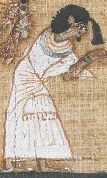
Hair in Egyptian Art for Expressing Dance.


Due to the estrict rules of the Egyptian art, artists in Ancient Egypt needed to find unnatural ways of expressing some movements, especially during the Old and Middle Kingdom. Distorsion and sprain characterises dynamic scenes (dancing, acrobaces, games…) in those periods of Egyptian history.

Dancing scene from mastaba of Mereruka. VI Dynasty. Saqqara. Ancient Egypt

Dancing scene from mastaba of Mereruka. VI Dynasty. Saqqara. Image: http://www.osirisnet.net

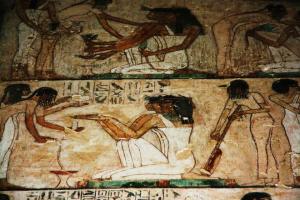
musician girls in Rekhmire's tomb. Ancient Egypt

Musician girl playing the long neck lute. Tomb of Rekhmire in Gourna. XVIII Dynasty. Photo courtesy: Dagmar Krejci.

However, from the New Kingdom dynamism appears in Ancient Egypt decoration in a more natural way. The Egyptian artist gradually tretaed the bodies in movement in a less rigid way. And one of the elements which helped them was the hair. We have already seen, for instance, that hair was a resource for expressing the movement while playing an instrument. However, hair as an artistic resource of Egyptian artist applied to the body language dates not from the New Kingdom, but before. According to the iconography, the mourning gesture of shaking hair forwards was expressed in Ancient Egypt by drawing the mane of hair over the woman’s face. That way, the Egyptian artist represented this body movement. We can imagine that the mourner was not permanent bended, but moving her body and head forwards and backwards.
Detail of the stele of Abkaou in the Louvre Museum. XI Dynasty. Ancient Egypt

Detail of the stele of Abkaou in the Louvre Museum. XI Dynasty. Photo: http://www.commons.wikimedia.org

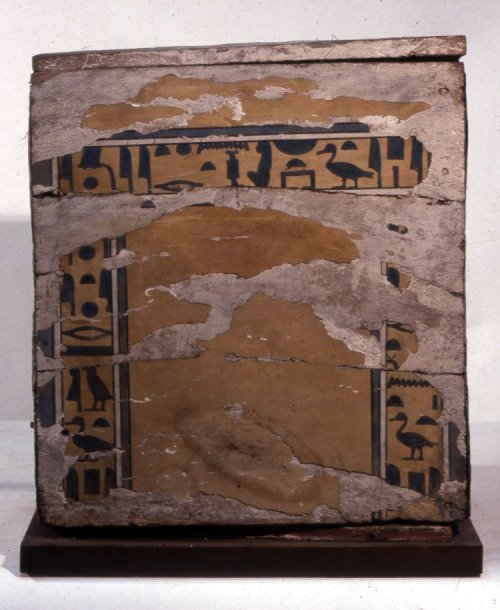
As long as we know, the first example of this artistic resource comes from Middle Kingdom; in the stele of Abkaou (XI Dynasty) and in a fragment of a coffin (XII Dynasty) mourners bend their body and their hair is forward.

Later on, in a rishi coffin from XVII Dynasty, there is a scene of the funerary procession, in which one mourner bends her body and shakes the hair forwards. That way of expressing this mourning gesture will go on in the Ancient Egypt iconography.
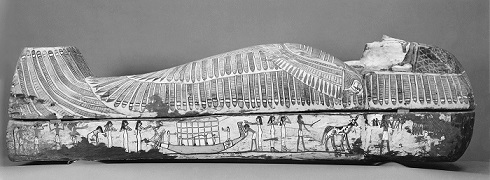
Rishi coffin. Right side with the funerary procession. On the left a common mourner shaking hair forwards. XVII-XVIII Dynasty. Thebes. Funerary ceremony in Ancient Egypt.

Rishi coffin. Right side with the funerary procession. On the left a common mourner shaking hair forwards. XVII-XVIII Dynasty. Thebes. Photo: http://www.metmuseum.org

Tomb of the Dancers from Thebes. XVII Dynasty. Ashmolean Museum of Oxford. Ancient Egypt.

Tomb of the Dancers from Thebes. XVII Dynasty. Ashmolean Museum of Art and Achaeology in Oxford. Photo: www.ashmoleanprints.com

The paintings from the “Tomb of the Dancers” date from the XVII Dynasty and we can see in them how in that period of the Egyptian history  artists started to treat the body in movement in a more realistic way, traying to express what that women were doing: jumps, gestures with the shoulders, arms raised…, although their hair are motionless.

In the New Kingdom, Egyptian art takes the technique from the sacred funerary decoration and the hair forwards and/or backwards became a way of drawing more daily gestures. Artist will learn to manipulate hair in a realistic way for expressing the movement of dancing.
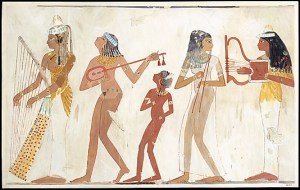
Music scene from the tomb of Djeserkaraseneb. XVIII Dynasty. Tempera of Charles. K. Wilkinson. Ancient Egypt.

Music scene from the tomb of Djeserkaraseneb. XVIII Dynasty. Tempera of Charles. K. Wilkinson. Photo: www.metmuseum.org

In the tomb of Dyeserkaraseneb (TT 38), dating from the reign of Tuthmosis IV there is a music scene in which one of the musicians appears with her plaits moving for expressing how she turns he head back. Next to her a dancing girl is slightly bended backwards, whose lateral plaits of hair were drawn following her movement.

Dancing girl. Tomb of Dyeserkaraseneb (TT 38). XVIII Dynasty. Ancient Egypt.

Dancing girl. Tomb of Dyeserkaraseneb (TT 38). XVIII Dynasty. Photo: www.osirisnet.net


Dancers and musicians from the tomb of Nebamon (TT 90). XVIII Dynasty. Ancient Egypt.

Dancers and musicians from the tomb of Nebamon (TT 90). XVIII Dynasty. Photo: www.commons.wikimedia.org

The famous scene of the dancers from the tomb of Nebamon (TT 90) shows one of the dacing girls with both laterals plaits of hair shaing forwards with her head. In fact, the whole body was treated in such a realistic way that we can imagine her moving herself to the rhythm of the music her fellows are playing.

In that period of Egyptian history the artists learnt how to draw the body movement in a more realistic way manipulating many parts of the human body, included the hair. This last one was a technique taken from the sacred funerary art of Ancient Egypt.

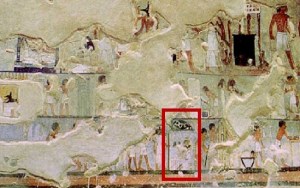
 

Offering the Make-up in Ancient Egypt. Funerary rites get into Egyptian Art.


We usually think that the decoration from the Egyptian tombs does not change in the whole history of Ancient Egypt. But in fact, there are  some images, which appear in some periods and become usual during some time.
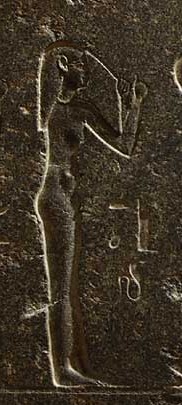
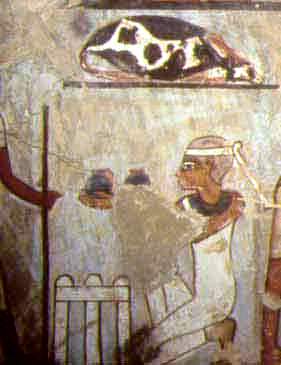
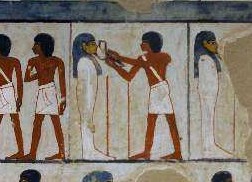
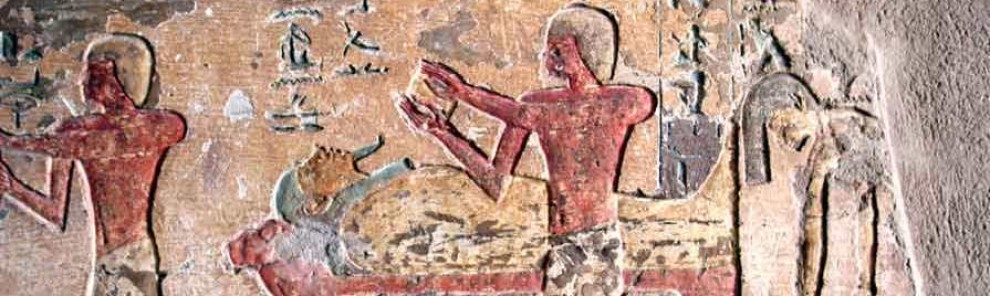
Mourner offering make-up in the tomb of Rekhmire. XVIII Dynasty. Ancient Egypt.

Mourner offering the make-up. Detail from the south wall in the tomb of Rekhmire. XVIII Dynasty.

That is the case of a typical Egyptian scene of the professional mourner in some tombs of the New Kingdom: the tomb of Rekhmire (TT 100), the tomb of Sobekhotep (TT 63) or the tomb of Sennefer (TT 96). The mourner appears with no mane of hair kneeling in front of an altar and offering globular vases. According to the inscription in Rekhmire’s tomb, she if offering green make-up for the eyes (Hodel-Hoenes, S., Leben und Tod im Alten Ägypten. Thebanische Privatgräber des Neuen Reiches. Darmstadt, 1991, p. 130).

Offering make-up in the tomb of Sennefer. Ancient Egypt.

Offering make-up in the tomb of Sennefer.It is similar to the scene in the tomb of Rekhmire. Gourna. XVIII Dynasty. Photo: www.osirisnet.net

We could think that, if the scene appears now it is becuase it refers to something belonging to the Egyptian funerals of the New Kigndom,  but in fact it is not so.

This action happens just after the Opening of the Mouth ceremony; ; a group of Ancient Egypt sacred practices 8And also secret) for giving back the life to the deceased. We have already seen that, according to the documents, it seems that in these ceremony the mourners were shaven just after the official mourning rite. It was the moment of offering the Udjat eye to the mummy and reviving this way the myth of Osiris, in which the god received the Udjat eye as a sign if his final resurrection. And in the rite it happens when the ox (as a sethian victim) has already been sacrificed.

Offering make-up in the tomb of Sennefer. Gourna. Ancient Egypt.

Detailof the offering make-up in the tomb of Sennefer. Gourna. XVIII Dynasty. Photo: http://www.osirisnet.net

At the end of Ancient Egypt funerals the dead had to receive the Udjat eye. The funeral staff symbolized it shaving the mourners and giving make-up for the eyes. The fact of presenting make-up is already documented in the Pyramid Texts of the Old Kingdom (Pyr. 54b-55; Pyr. 609) and the Coffin Texts of the Middle Kingdom (CT VII, 934; 936) as a gesture which symbolizes “to fit the eye in the face” (Wb, IV, 370, 12).

In many cases the mourners offered green make-up for the left eye and black make-up for the right one. This was a way of representing the whole lunar cycle, and therefore the victory of Horus over Seth. A belief, which was very rooted to Egyptian though from immemorial times. So, to give the make-up at the end of the Opening of the Mouth ceremony would be much older than the XVIII Dynasty.

For some reason, the practice of offering the make-up could be during the XVIII Dynasty represented. As it happens with some other gestures of funerary rites, the artists of the New Kingdom were more aware than before of what happened during the Egyptian funerals. The secret funerary rites of Ancient Egypt, got into the Egyptian art.


Hair: a Resource in Ancient Egypt Art for Expressing Movement.


XVIII Dynasty tombs located in Luxor are especially rich in small details, some of them escaping easily from our sight, which give much information about Ancient Egypt.

This is the case of an image in the scene of the banquet in the tomb of Rekhmire (I have to express my gratitude to Dagmar Krejci, who called my attention on it).

Banquet in Rekhmire's tomb.Ancient Egypt. Egyptian Art

Banquet in Rekhmire’s tomb in Gourna. XVIII Dynasty. Photo: Mª Rosa Valdesogo

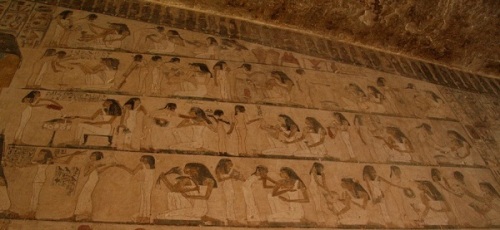
The whole scene shows many women during the Egyptian banquet being assisted by young girls. These servants are pouring drinks, offering floral necklaces and playing music. The Egyptian artist expressed the youth of those girls by means of their hairstyle, made by lateral fine plaits and a thicker back lock.

musician girls in Rekhmire's tomb. Ancient Egypt

Musician girl playing the long neck lute. Tomb of Rekhmire in Gourna. XVIII Dynasty. Photo courtesy: Dagmar Krejci.

We want to focus on one girl playing a long neck lute, whose hair covers her face. About this girl Dagmar Krejci and Peter Zamarovsky, from Czech Republic, already wrote something, paying especial attention to the lute she is playing.

What about her hair? Watching carefully, we realize that her hairstyle is the same one as her fellows’, with the lateral plaits and the back lock. However her face is covered by the plaits, while the black stroke in her front seems to be her back lock, which is now onwards. Why?

The answer could be in her gesture. This girls is slightly bended forwards for playing the lute. Maybe the Egyptian artist tried to find a way of expressing this position drawing her hair forwards.

However, some other girls in this same scene appear also bended, in many cases with a real nod, and their hairstyle has no changes. Then, which is the difference with our lute player?

We need to consider two things: 1) the long neck of the lute based on the ground and 2) the fact that she is playing while standing. Maybe for playing with this posture she needed to move and this movement was expressed by the Egyptian artist with the change in her hairstyle. So, she was not just playing, but also moving.

Rishi coffin. Right side with the funerary procession. On the left a common mourner shaking hair forwards. XVII-XVIII Dynasty. Thebes. Funerary ceremony in Ancient Egypt.

Rishi coffin. Right side with the funerary procession. On the left a common mourner shaking hair forwards. XVII-XVIII Dynasty. Thebes. Photo: www.metmuseum.org

The movement expressed by means of the hair forwards is not new for us. We have seen all over this blog that it was a resource in Egyptian art for depicting the movement of the Egyptian mourners. On the other hand, in Rekhmire’s tomb there are many new artistic solutions for expressing different things: the girl turning her back, the lateral perspective of the shoulders, the body spinning around, the dynamism of some workers…

Man spinning his body around. Tomb of Rekhmire. Ancient Egypt. Egyptian Art

Man spinning his body around. Tomb of Rekhmire in Gourna. XVIII Dynasty. Photo: Mª Rosa Valdesogo

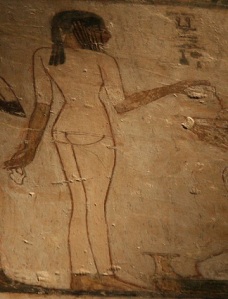
Girl turning her back. Tomb of Rekhmire. Ancient Egypt. Egyptian Art

Girl turning her back. Tomb of Rekhmire in Gourna. XVIII Dynasty. Photo: Mª Rosa Valdesogo

The XVIII Dynasty was a moment of news in Egyptian art and the young lute player in the tomb of Rekhmire could be a sign of it. The Egyptian artist manipulating her hairstyle, tried to express as real as he could what the young girl was exactly doing: moving herself while playing the lute.

Shaven Mouners in an Ancient Egypt Funerary Boat.


Ancient Egypt wooden models were frequent during the Middle Kingdom and thanks to them we know much today about everyday life of ancient Egyptians: butchery, bread production, granaries… Among them there were also many dedicated to the funerary boats which Egyptians utilized for transporting the mummy on the Nile to the necropolis.

These funeral barges show the body lying on the bier and being flanked at both ends by the two professional Egyptian mourners in the role of Isis and Nephtys and sometimes accompanied by one priest. The attitude of that two women depicted by the artist is quite static and not too much can be deduced from it, except that they accompany the deceased.

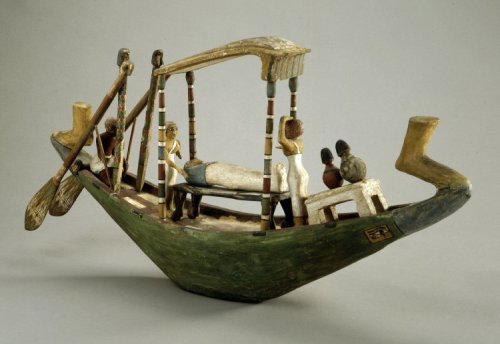
wood model of a boat with mummy and mourners. British Museum EA9524. XII Dynasty. Ancient Egypt

Wooden model of a funerary boat with the mummy and the two professional mourners. Their scalp is well visible in pink color and with black spots. XII Dynasty. Photo: British Museum.

However, piece EA9524 in the British Museum, dating from the XII Dynasty, represents the funerary boat with the corpse and the two mourning women and both extremes; in this case there is no priest, but a helmsman. And the image of both women gives some interesting information about them.

The two professional Egyptian mourners are not in such a static posture as usual. They appear with their left arms raised and the hand on the head, while the right arms are extended towards the mummy. So, they are not just standing, but making the typical gesture of mourning in Ancient Egypt.

But the most important point in this piece is in the head of those two professional Egyptian mourners. They are not with long hair, and their hair is not covered by a scarf. In both women (and also in the helmsman) the scalp can be seen. Their heads were painted in pink color with small black spots. So, the Egyptian artist indicated that their hair was very short or that their head had just been shaved.

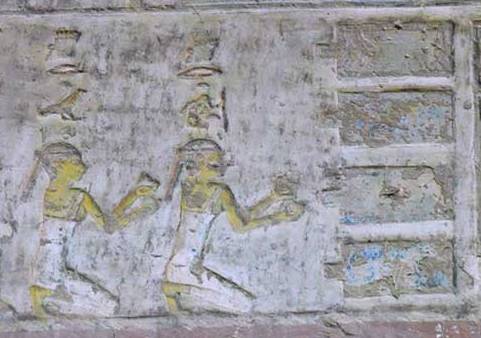
The two Drty (two kites), offering nw vases to the four pools. Relief from the tomb of Pahery in el-Kab. XVIII Dynasty. Ancient Egypt

The two professional mourners with short hair at the end of the funeral. Relief from the tomb of Pahery in el-Kab. XVIII Dynasty. Photo: www.osirisnet.net

That links perfectly with one of our affirmations: the hair of two professional Egyptian mourners in the role of Isis and Nephtys was cut and that short hair was a distinctive of the professional mourner in Ancient Egypt. The short hair became a resource for the artists of Ancient Egypt for depicting these two professional mourners and differentiate them from the common mourners.

Isis, Nephtys, Neith and Serket. Four Divine Egyptian Mourners?


Last week we saw that in some cases Egyptian art offers images, whose meaning seems not clear, but which are based on well known practices from Ancient Egypt.

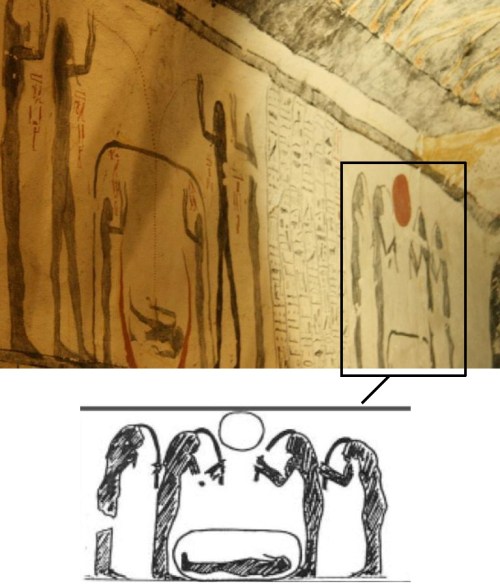
That was the case of two scenes, one from the Book of the Caverns in the tomb of Ramses IX and the other one from the temple of Osiris in Abydos. In both cases four mourning women appear pulling and shaking a front lock of hair.

Four mourners for Osiris. Temple of Abydos. Ancient Egypt.

Four mourners for Osiris with their front lock of hair falling forwards. Temple of Abydos. Photo: Mª Rosa Valdesogo Martín

We know that in Ancient Egypt belief the official mourners who took part in the deceased’s resurrection were two, Isis and Nephtys. However in these two images they are four women making a mourning rite. Can we deduce something more about the identity of this foursome?

These four female figures are categorized in the tomb of Ramses IX  as “goddesses” and they are included in the decorative program of a tomb and the temple of Osiris in Abydos, both belonging to a funerary context. So, for deducing more about them, we have to consider three main aspects: They are four, they have a divinie nature and they are related to the mummy and the  body’s restoration.

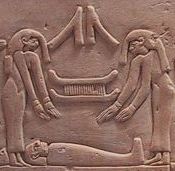
Is there a group of four goddesses in Ancient Egypt, who took care of the deceased? Yes, Isis, Nephtys, Neith and Serket. In the Egyptian thought they four formed a team for protecting the dead, or more concreetly, the organs of the dead.

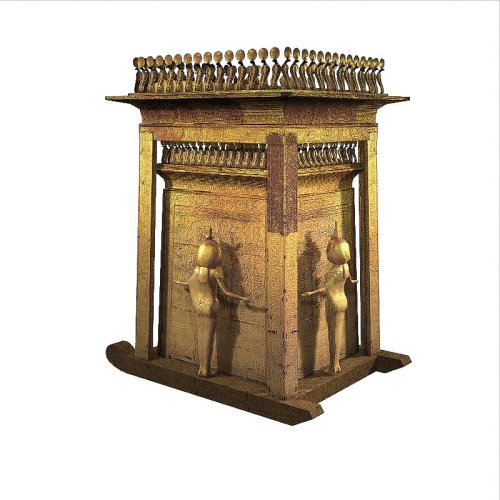
Canopic shrine of Tutankhamun. Serket. Ancient Egypt.

Canopic shrine of Tutankhamun with Serket on the left and Isis on the right. XVIII Dynasty. Cairo Museum. Photo: www.globalegyptianmuseum.org

For that reason they four were the guardians of the caponic jars which contained the organs of the dead and of the coffin, which contained the mummy. And their image together were usual in these Egyptian canopic chests and sarcophagi.

Coffin of Khonsu, Sennedjem's son, from Deir el-Medina. Neith and Serket at the feet end. XIX Dynasty. Ancient Egypt.

Coffin of Khonsu, Sennedjem’s son, from Deir el-Medina. Neith and Serket at the feet end. XIX Dynasty. Egyptian Museum in Cairo. Photo: www.drhawass.com

These are the four goddesses who spread their arms over the funeral chest of Tutankhamun. We can see them also in the coffin of Khnonsu (Sennedjem’s son) from XIX Dynasty, Isis and Nephtys are depicted at the head end of the coffin, while Neith and Serket appear together at the feet end.

Coffin of Khnum Nakht. Feet extreme with inscriptions referring to Nephtys. XIII Dynasty. Metropolitan Museum of Art of New York. Ancient Egypt

Coffin of Khnum Nakht. Feet extreme with inscriptions referring to Nephtysand also Serket. XIII Dynasty. Metropolitan Museum of Art of New York.

Neith and Serket, together with Isis and Nephtys, were also mentioned in the inscriptions of some coffins and in canopic chests dating from the Middle Kingdom.

Wooden canopic chest of Satipi. Neith is included in the inscription. XII Dynasty. Ancient Egypt.

Wooden canopic chest of Satipi. Neith is included in the inscription. XII Dynasty. Photo: British Museum.

So, the union of these four goddesses was something well established in Ancient Egyptian belief. And the four mourners in the tomb of Ramses IX and the temple of Osiris in Abydos could perfectly be those ones.


Four Egyptian Mourners, Four Egyptian Locks of Hair.


Ancient Egypt iconography is usually clear and understandable. Some other times, although the scenes are explicit, the sense of the image it is not so clear. That happens especially with religious images accompanying sacred texts from XIX Dynasty.  That is the case of the resurrection scene from the tomb of Ramses IX  belonging to the Book of the Caverns, in which four women pull their front lock of hair towards the mummy.

Women pulling lock of hair over the dead. Tomb of Ramses IX. Valley of the Kings. XX Dynasty. Ancient Egypt

Women pulling lock of hair over the dead. Tomb of Ramses IX. Valley of the Kings. XX Dynasty. Photo: Mª Rosa Valdesogo Martín.

We know that this was a gesture made by mourners as one of the practices for helping in the dead’s restoration. But we also know tha these mourners making that were the two representatives of Isis and Nephtys.

The scene from the tomb of Ramses IX shows four women instead of two. Now the question is why?

Four mourners for Osiris. Temple of Abydos. Ancient Egypt.

Four mourners for Osiris with their front lock of hair falling forwards. Temple of Abydos. Photo: Mª Rosa Valdesogo Martín

Looking for more exmaples the only similar scene we found is an image from the temple of Osiris in Abydos. Here four women appear in a sorrow position with a front lock of hair falling forwards. Although they are not pulling the hair, it is clear the realtionship of it with the Osiris resurrection. But the inportant point here is that they are four and not two.

In the Egyptian Book of the Caverns from the tomb of Ramses IX, these four women are named as “...the Goddesses who mourn together in the secret place of Osiris…“. So, it would not be crazy to think about these four female figures in the temple of Osiris in Abydos, also as women with a divine nature.

But…who?…Any idea?…

We will see in the next post.

The Ancient Egypt burial and rebirth “narrated” in a fragment of a coffin.


Today I would like just to stress the importance of watching well the pieces in museums all over the world for knowing better Ancient Egypt.

Usually people focus on travelling to Egypt or on watching those big pieces in great museums. It is obviously necessary (if not essential) both. But we cannot undersatimate less famous museums and pieces, which also show us so much about Ancient Egypt culture.

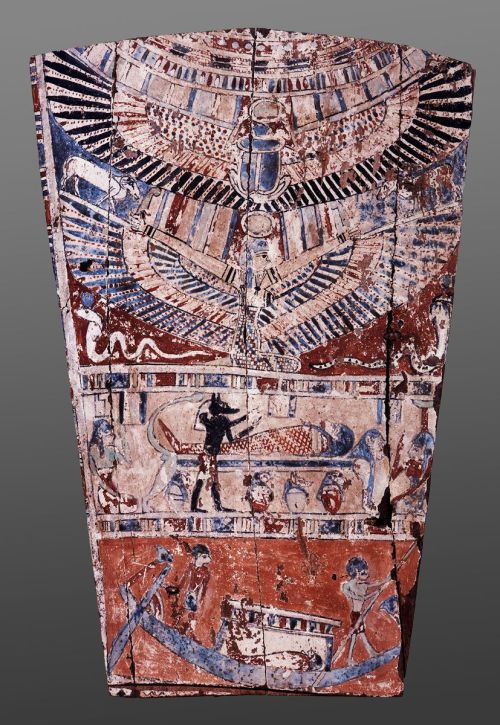
Mourning scene in a fragment of a coffin. V century BC. Ancient Egypt. Museum of Budapest

Fragment of a coffin. V Century BC. Museum of Fine Arts in Budapest.

This is the case of this fragment of a Egyptian coffin dating from the Late Period in the Museum of Fine Arts of Budapest. Apparently the images here are the usual funerary images we can find in some other formats for Ancient Egypt art (walls, stelae…). And it fact, they are. But, we are facing different scenes in the same surface. The point is: are they independent? or Are they conected and telling a sequence?

Probably many “western” visitors looking at that piece would watch it from top to down. So, first the scarab, second the winged goddess Maat, then the mummy with Anubis and the two mourners Isis and Nephtys, and finally the mummy on the boat. In that order, there is no sequence at all.

However, the decoration is on a sacred surface, on a funerary surface, and had to have a funerary meaning. Because in Ancient Egypt belief, the art had a practical purpose. In this case, and taking into consideration that these images belonged to an Egyptian cadaver, they had to be there related of the resurrection of the mummy.

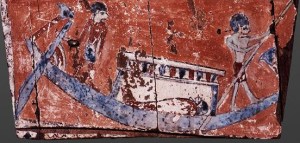
Mourning scene in a fragment of a coffin. V century BC. Ancient Egypt. Museum of Budapest

The corpse neing transported to the necropolis.

Firstly the corpse was transported to the necropolis and he/she had to to cross the Nile, and that is what the Egyptian artists drew at the bottom of the piece.

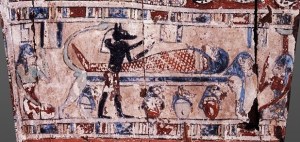
Restoring rites. Anubis emblaming the corpse and Isis and Nephtys at both ends making the mourning rite. Ancient Egypt

Restoring rites. Anubis emblaming the corpse and Isis and Nephtys at both ends making the mourning rite.

Once in the necropolis took place the restoring rites for giving back the life to the death. That is, Anubis embalming the mummy and the two professional mourners in the role of Isis and Nephtys making the mourning rite for giving back the vital faculties to the body.

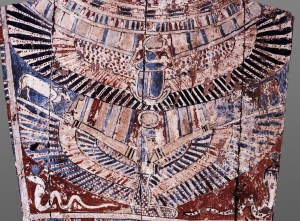
The winged goddess Maat, and the scarab with the solar disk. Ancient Egypt.

The winged goddess Maat, Egyptian goddess of order, truth and righteousness; and the scarab with the solar disk, Egyptian icon of rebirth.

Afterwards the dead entered in the Hereafter, but before being accepted there he/she had to overcome the final judgment (psicostasia). Here the dead had to show that on earth he/she had behaved following the Maat’s rules, that is correctly, since she (here the winged goddess) was the goddess of order and righteousness.

Once it was proven that he/she had been righteous, he/she could enter into the Heaven. The final resurrection was a fact. The scarab with the solar disk is a typical Egyptian icon of rebirth.

Summing up, this fragment of coffin should be “read” from bottom (funeral) to top (resurrection); only like that the two middle registers have a meaning: the restoring rites and the final judgment.

Let’s  watch at Ancient Egypt art with an Ancient Egypt logic.


Egyptian Words for “Lock of Hair” related to the Mourning Rite.


Detail of Papyrus of Ani. The lock of hair of Ani. XVIII Dynasty. British Museum. Ancient Egypt.

Detail of Papyrus of Ani. The lock of hair of Ani. XVIII Dynasty. British Museum. Photo: www.britishmuseum.org

Ancient Egyptians had different ways to refer to the action of disheveling hair. That happens because the Egyptian was a very rich language and had many centuries of history.

In this same line, we find that Egyptians also had various terms for designating “lock of hair“.

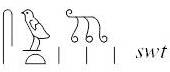
Egyptian word for "lock of hair".

Egyptian word for “lock of hair”.

The most common, that we have been reading and watching all over this blog is the word “swt” or “syt”.It was a very generic word for referring to a portion of head hair. This term seems to appear in the New Kingdom and according to the iconography it was chosen by scribes mainly for naming the pulled lock of hair related to the mourning practices.

Detail of the sarcophagus of Djedhor with Isis pulling her front lock of hair. Ptolemaic Period. Louvre Museum. Ancient Egypt

Detail of the sarcophagus of Djedhor with Isis pulling her front lock of hair. Ptolemaic Period. Louvre Museum. Photo: www.cartelfr.louvre.fr

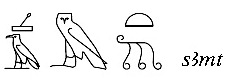
Egyptian word for "lock of hair"

Egyptian word for “lock of hair”

The word “samt” has in Egytian a double value. In fact it is a controversial term. For some scholars it should be translated just as “sadness” or “lament“, but somne other scholar, due to the hair determinative and taking into consideration the context this word appears in, consider that it could be translated as “lock of hair“.

All along this blog we have seen how the word “samt” is closely related to the mourning rite and concretely to the mourning practice of cutting a piece-lock of hair of the professional mourners at the end of the funerary ceremony. So, one of the translations of  “s3mt” could be exactly this one: “lock of hair of a profesional mourner”.

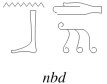
Another very interesting Egyptian word for “lock of hair” is “nebed“.Lock of Hair nbd. Ancient Egypt It also appears in the New Kingdom and it seems to refer concretly to “plaited lock of hair“. It is very interesting to  notice the  between “nebed” and “nebedj”. Lock of Hair nbD. The bad. Ancient EgyptThis last word exists in Ancient Egypt from the Old Kingdom and its translation was “the bad“, in fact with the hair determinative it could also have the enemy determinative. There also was the proper noun of “Nebedj“, which was a way of naming Seth, the enemy of Osiris (and also Apophis,the enemy of Re).Lock of Hair nbD. Seth and Apophis. Ancient Egypt
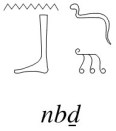
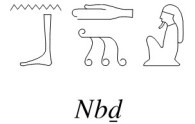
We wonder if the word nebed for “lock or plait of hair” could come from the former Egyptian term nebedj, which was related to Seth, to he bad, to the enemy of Osiris. This is a dimension which links pefectly with the mourning practices with the hair of the professional mourners destinated to the resurrection of the dead. So, maybe nebedj was another Egyptian word for “lock of hair” again related to the mourning rite.

An Egyptian Ostracon with Professional Mourners inside the Tomb.


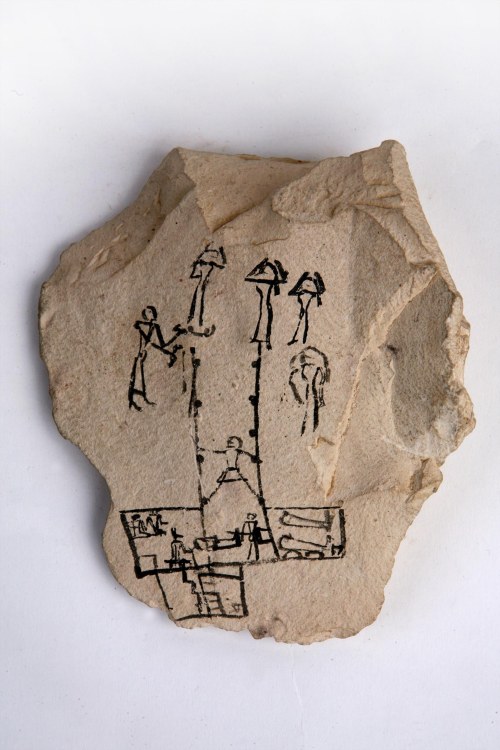
Ostracon with funerary scene. New Kingdom. Manchester Museum. Ancient Egypt

Ostracon with funerary scene. New Kingdom. Manchester Museum.

Last week we could read about ostracon 5886 in Manchester Museum. In that skecht the Egyptian artists represented what happened outside the tomb. Let’s see now what happened inside.

Inside the tomb, a man is descending and some others appear in the funerary chamber carrying the coffin. But there are two important things: a man with a jackal head is next to the corpse and two kneeling figures are in a corner of the chamber.

Acccording to Campbell Price the coffin would be being  placed into the tomb, which is completely true. But was it necessary for placing the coffin a man with a jackal-headed mask and those two kneeling figures?

Ostracon with funerary scene. Detail of the inside. New Kingdom. Manchester Museum. Ancient Egypt.

Ostracon with funerary scene. Detail of the inside. New Kingdom. Manchester Museum.

The schematic scene would in fact represent what happened inside the tomb for reviving the deceased. We have already seen that the Egyptian Opening of the Mouth ceremony would happen inside the tomb and that the two mourners in the role of Isis and Nephtys were a part of the party making a mourning rite in favour of the mummy.

The man with the jackal-headed mask as a living image of Anubis would play the role of the embalmer. In our opinion these two kneeling figures would be the two representatives of Isis and Nephtys.  In fact the scene shows the members of the common Egyptian scene in which Anubis assists the mummy while Isis and Nephtys are (standing or kneeling) at both ends of the corpse. The difference here is that these ones stay apart in the chamber and already with their short hair.

Isis and Nephtys at both extremes of the corpse with shen rings. Tomb of Siptah. XIX Dynasty. Valley of the Kings. Ancient Egypt. Photo: www.thethebanmappingproject.com

Isis and Nephtys at both extremes of the corpse with shen rings. Tomb of Siptah. XIX Dynasty. Valley of the Kings. Photo: http://www.thebanmappingproject.com

The man on the right seems to hold with his hand a long straight object, which seems to be more similar to a kind of strike than to an incense burner, Could we consider it as the adze used in the Opening of the Mouth ceremony?

Opening of the Mouth ceremony from the tomb of Menna in Gourna. XVIII Dynasty. Photo: www.osirisnet.net

Opening of the Mouth ceremony from the tomb of Menna in Gourna. XVIII Dynasty. Photo: http://www.osirisnet.net

Both men are holding the mummy as if they wanted to place it down in the shaft after having finished the rites.

It does not seem too ridiculous to think that such schematic skecth would represent the end of the Opening of the Mouth ceremony and the moment in which the mummy is finally buried. Meanwhile the two professional mourners in the role of Isis and Nephtys would wait kneeling and already with no mane of hair until the dead is placed in the burial place and the shaft is sealed.

While that was happening inside the tomb, outside the common mourners would be lamenting, three of them with raise arms and one of them with hair on her face and her arms hanging down.

An Egyptian Ostracon with a Disheveled Mourner.


Funerals of Ancient Egypt are usually known thanks to funerary scenes from the tomb walls. However, small objects can also give a very useful information.

Ostracon with funerary scene. New Kingdom. Manchester Museum. Ancient Egypt

Ostracon with funerary scene. New Kingdom. Manchester Museum.

That is the case of a limestone ostracon from Thebes and in the Manchester Museum (Acc. no. 5886), which dates from the New Kingdom. An Egyptian artist drew on it an ink sketch with a scene of a funeral.

The scene represents an Egyptian burial (there is a post written by Campbell Price in the blog ofthe Manchester Museum). The plan of the tomb is seen from a bird’s-eye view, while the members of the funerary team and the coffin are shown from a front view (the combination of different visual plans was normal in Egyptian art).

Ostracon with funerary scene. Detail of common mourners. New Kingdom. Manchester Museum. Ancient Egypt.

Ostracon with funerary scene. Detail of the common mourners. New Kingdom. Manchester Museum.

Outside the tomb a group of mourners are standing while weeping and a priest is with them burning incense and pouring water. Although it is not too clear, it seems that the artist pretended to draw one of these women with a lock of hair falling in front of her face. It should be pointed out that, while the three others appear with her raised arms, the mourner with the hair falling on her face has her arms hanging down.

Why? Egyptian artists had several ways of representing the lament: tears droping on the face, raised arms, arms crossing on the chest, hands covering the face, hands over the head, hair falling forwards, hair covering the face…Probably the artist who drew this sketch chose to represent three common mourners with raised arms and another one with hair falling on her face.

Common Mourners in the tomb of Rekhmire. Ancient Egypt.

Common Mourners in the tomb of Rekhmire. Photo: Mª Rosa Valdesogo Martín.

In fact, a very similar solution found the Egyptian artist  in the tomb of Rekhmire (TT100), where some mourners are kneeling with their hands on their head, some others are standing with crossed arms on their chests and another one stands also with crossed arms but with the mane of hair covering her face.

Relief from the tomb of Amenemhat (TT 82)

Painting from the tomb of Amenemhat (TT 82)

Also in the tomb of Amenemhat (TT82) we can see a group pf common mourners among who, some raise their arms, some cover their faces with their hands and two make the nwn gesture of shaking hair forwards. With them a priests holds an incense burner and a purifying water vessel. The same scene as we can see in the ostracon of the Manchester Museum.

The scene of this ostracon could be considered as an schematic way (or an “ostracon version”) of the nwn gesture made by a common mourner.