Dear fellows,
following the requirement from some of you I send you here enclosed the biliography.
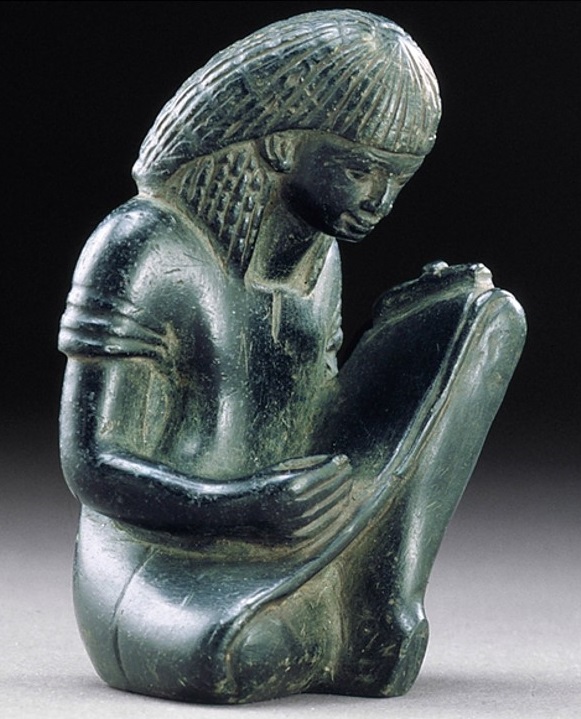
Scribe. XVIII Dynasty. Detroit Institute of Arts. Photo: http://www.dia.org
I hope this can help to some of you, specially students making their research.
BIBLIOGRAPHY
Alexiou, M., The Ritual Lament in Greek Tradition. Cambridge, 1974.
Allam, Sch., “Beiträge zum Hathorkult (bis zum Ende des Mitteleren Reiches”. MÄS 4, 1963.
Allen, T.G., The Book of the Dead or Going forth by Day. Chicago, 1974.
Alliot, “Le culte d’Horus à Edfou au temps des Ptolomees”. BdE XX, 2 vol. Le Caire. 1949-1955.
Altenmüller, H., “Die Texte zum Begräbnisritual in den Pyramiden des Alten Reiches”. ÄA 24, Wiesbaden,1972.
Ammar, H., Growing up in an Egyptian Village. (Silwa, Province of Aswan). London, 1954.
Aries, Ph., L’homme devant la mort. París, 1977.
Assmann, J., “Die Inschrift auf dem äusseren Sarkophagdeckel des Merenptah”. MDAIK, Band 28. 1972, pp. 47-74.
Awadalla, A.; Okasha, S., “Une paroi de la tombe du chancelier royal P3-Nxsy à Héliopolis”. Orientalia 58, fasc. 4, 1989, pp. 493-496.
Aufrère, S., L’Univers minéral dans la pensée égyptienne. BdE 105. Le Caire, 1991.
Aufrére, S., “Le cosmos, le minéral, le végétal et le divin”, Bulletin du Cercle lyonnais d’égyptologie Victor Loret, 7, 1993, pp.7-24.
Ayrout, H.H., Moeurs et coutumes des fellahs. París, 1938.
Barguet, P., Les Textes des Sarcophages du Moyen Empire. Paris, 1986.
Barguet, P., Le Livre des Morts des Anciens Égyptiens. LAPO, Paris, 1967.
Barguet, P., “L’Am-Douat et les funérailles royales”. RdE 24, 1972, pp.7-11.
Barguet, P., “Le Livre des Cavernes et la reconstitution du corps divin”. RdE 28, 1976, pp. 25-37.
Barucq, A. et Daumas, F., Hymnes et prières de l’Égypte ancienne. LAPO, Paris, 1980.
Bell, M. R., “Gurob Tomb 605 and Mycenaean Chronology”. Mélanges Gamal Eddin Mokhtar. IFAO. Le Caire, 1985, pp. 61-86.
Berlev, O.; Bresciani, E.; Caminos, R.A.; et allii, L’homme égyptien. Paris, 1992.
Bernand, E., Inscriptions métriques de l’Égypte gréco-romain, nº 24. (Chénoboskion IIs. Ap. J-C.). París, 1969.
Blackman, W.S., Les fellahs de la Haute-Égypte. París, 1948.
Boak, A.E.R., “The Organisation of Gilds in Graeco-Roman Egypt”. TAPhA, 68, 1937.
Bonneau, D., La crue du Nil, divinité égyptienne à travers mille ans d’histoire. (332 av.- 641 ap. J.-C.) París, 1964.
Bonnet, H., Reallexikon der ágyptischen Religionsgeschichte. Berlín, 1952.
Borghouts, J.F., The Magical Texts of Papyrus Leiden I, 348. OMRO LI, Leiden, 1970.
Bourriau, J., Pharaohs and Mortals. Egyptian Art in the Middle Kingdom. Cambridge, 1988.
Bresciani, E., “Éléments de rituel et d’offrande dans le texte démotique”. Ritual and Sacrifice in the Anciente Near East. OLA 55. Leuven, 1993, pp.45-49.
Briffault, R., Las madres. La mujer desde el matriarcado hasta la sociedadmoderna. Buenos Aires, 1974.
Brunner-Traut, E., Der Tanz im alten Ägypten. Glückstadt. 1938
Brunner-Traut, E., “Die Wochenlaube”. MIO 3, 1955, pp. 11-72.
de Buck, A., The Egyptian Coffin Texts. Vols. I-VII, Chicago, 1935-1961.
de Buck, A., “The earliest version of Book of the Dead 78”. JEA 35. 1949, pp. 87-97.
Budge, E. A. Wallis, The Gods of the Egyptians. 2 vols. New York, 1969.
Budge, E. A. Wallis, Osiris and the Egyptian Resurrection. New York, 1973.
Casajus, D., La tente dans la solicitude. La société et les morts chez les Tuaregs Kel Ferwan. París, 1987.
Cauville, S., “Chentayt et Merkhetes, des avatars d’Isis et Neftis”. BIFAO 81, 1981, pp. 21-40.
Cervelló Autuori, J., Egipto y África. Orígen de la civilización y la monarquíafaraónicas en su contexto africano. Barcelona, 1996.
Cirlot, J. E., Diccionario de símbolos. Barcelona, 1991.
Chevalier, J. et Gheerbrandt, A., Dictionnaire des symboles. Mythes, rêves, coutumes, gestes, formes, figures, couleurs, nombres, 4 vols., París, 1969.
Clère, J.J., Les Chauves d’Hathor. Leuven, 1995.
Crompton, W.M., “Two clay Balls in the Manchester Museum”. JEA 3, 1916, p. 128.
Daressy, M.G., “Les cercueils des prêtres d’Amon. (Deuxième trouvaille de Deir el-Bahari)”. ASAE VIII. Le Caire, 1907, pp. 3-38.
Daumas, F., “La scène de la résurrection au tombeau de Pétosiris”. BIFAO 59, 1960, pp. 63-80.
Davies- Gardiner, Tomb of Amenemhet. EEF, 1915.
Decker, W., Sport und Spiel im Alten Ägypten. München, 1987.
Degardin, J.C., “Correspondances osiriennes entre les temples d’Opet et de Khonsu”. JNES, vol. 44, nº 2, 1985, pp. 115-131.
Delvaux, L.; Warmenbol, E., Les divins chats d’Égypte. Leuven, 1991.
Derchain, Ph., La lune, mythes et rites. SourOr 5, París, 1962.
Derchain, Ph., “La pêche de l’oeil et les mystères d’Osiris à Dendera”. RdE 15, 1963, pp. 11-25.
Derchain, Ph., Le Papyrus Salt 825 (B.M. 10051). Rituel pour la conservation de la vie en Égypte. Académie Royale de Belgique, Cl. Lettres, Mémoires 58/1a, 1965.
Derchain, Ph., Hathor quadrifons. Istanbul, 1972.
Derchain, Ph., “La perruque et le cristal”. SAK 2, 1975, pp. 55-74.
Derchain-Urtel, M.Th., “Les scènes rituelles des temples d’époque grécoromaine en Égypte et les régles du jeu ‘Domino'”. OLA 55, Leuven, 1993, pp. 99-105.
Derret, J.D.M., “Religious Hair”. MAN 8, 1973, pp. 100-103.
Desroches-Noblecourt, Ch., “Une coutume égyptienne méconue”. BIFAO 45, 1947, pp. 185-232.
Desroches-Noblecourt, Ch., “Concubines du mort et mères de famille au Moyen Empire”. BIFAO 53, 1953, pp. 7-47.
Desroches-Noblecourt, Ch., “Isis Sothis-le chien, la vigne-, et la tradition millénaire”. MIFAO 104, 1980, pp. 15-24.
Desroches-Noblecourt, Ch., La femme au temps des pharaons. Paris, 1986.
Dondelinger, E., El libro sagrado del Antiguo Egipto. Papiro de Ani, BritishMuseum 10470. Traducción del alemán por Adela Rodríguez Vargas y Víctor Martínez Lapera. Madrid, 1988.
Drioton, E., “Le rôle funéraire d’Hathor au Moyen Empire”. BiOr 15, 1958, pp. 188-190.
Dunand, F.; Heim, J.L.; Henein, N.; Lichtenberg, R., La nécrpole de Douch (Oasis de Kharga). DFIFAO 26, 1992.
Durand, G., Las estructuras antropológicas de lo imaginario. Paris, 1979.
Dziobek, E.; Raziq, M.A., Das Grab des Sobekhotep. Theben Nr. 63. Deutsches Archäologisches Institut. Abteilung Kairo. Mainz am Rhein. 1990
Dziobek, E., Das Grab des Ineni. Theben Nr. 81. DAIK. 1992.
Edwards, I.E.S., “Something which Herodotus may have seen”. RdE 27, 1975, pp. 117-124.
Eliade, M., Images et symboles. Paris, 1952
Eliade, M., Traité d’histoire des réligions. Paris, 1970.
Enel, Le mystère de la vie et de la mort d’après l’enseignement des temples de l’ancienne Égypte. París, 1985.
Epron, L.; Daumas, F.; Montet, P., Le Tombeau de Ti. Fasc. I. MIFAO LXV,1. 1939.
Erman, A., “Zauberspruche für Mutter und Kind”. APAW. 1901, pp. 1-35.
Erman, A., La réligion des égyptiens. Paris, 1952.
Erman, A. und Grapow, H., Wörterbuch der Ägyptischen Sprache. Bände I-V. Berlin, 1982.
Eschweiler, P., Bildzauber im alten Ägypten. OBO, 137
Fakhry, A., “A note on the Tomb of Kheruef at Thebes”. ASAE XLII, 1943, pp. 449-508.
Faulkner, R.O., The Papyrus Bremner-Rhind. (British Museum No. 10188). BiblAeg. III. Bruselas, 1933.
Faulkner, R.O., “The Bremner-Rhind Papyrus-I (A. The Songs of Isis and Nephtys)”. JEA 22, 1936, pp. 121-140.
Faulkner, R.O., “The Lamentations of Isis and Nephtys”. MIFAO 66, 1961, pp.337-348.
Faulkner, R.O., “The Pregnancy of Isis”. JEA 54, 1968, pp.40-44.
Faulkner, R.O., The Ancient Egyptian Pyramid Texts. Oxford, 1969.
Faulkner, R.O., “Coffin Texts Spell 313”. JEA 58, 1972, pp.91-94.
Faulkner, R.O., The Egyptian Coffin Texts. 3 vols. 1973-1978.
Faulkner, R.O., The Ancient Egyptian Book of the Dead. London, 3ª ed., 1990.
Faulkner, R,O, A Concise Dictionary of Middle Egyptian. Oxford, 1962.
Fischer, H.G., “Representations of Dryt-mourners in the Old Kingdom”. Egyptian Studies I. Varia. 1976, pp.39-50.
Fox, M.V., “A Study of Antef”. Orientalia, vol. 46, fasc. 4, 1977, pp.393-423.
Franco, I., Rites et croyances d’éternité. París, 1993.
Frankfort, H., The Cenotaph of Seti I at Abydos. EES. 1993
Frazer, J.G., Adonis, Attis, Osiris. Studies in the History of Oriental Religion. The Golden Bough. Third Edition. London, 1914.
Gaballa, G.A.; Kitchen, K.A., “The Festival of Sokar (Tab. I-II)”. Orientalia, vol. 38, fasc. 1, 1969, pp.1-76.
Gardiner, A.H., Egyptian Hieratic Texts (Anastasi I and Koller). Leipzig, 1911.
Gardiner, A.H. and Peet, T.E., The Inscriptions of Sinai. 2 vols. EES 45th Memoir. London, 1952-1955.
Gardiner, A.H., “A Unique Funerary Liturgy”. JEA 41, 1955, pp.9-17.
Gardiner, A.H., “Hymns to Sobk in a Ramesseum Papyrus”. RdE 11, 1957, pp.43-59.
Gardiner, A.H., Egyptian Grammar. Being an Introduction to the Study ofHieroglyphs. Oxford, third ed., 1988.
de Garis Davies, N., Five Theban Tombs. (Being those ofMentuherkhepeshef, User, Daga, Nehemaway and Tati). Archaelogical Survey of Egypt. London, 1913.
de Garis Davies, N., The Tomb of Antefoker, vizier of Sesostris I, and hisWife, Senet (No. 60). EES. London, 1920.
de Garis Davies, N., The Tomb of Nefer-hotep at Thebes. New York, 1933.
de Garis Davies, N., The Tomb of Rekhmi-re at Thebes. New York, 1973.
Garstang, J., The Third Egyptian Dynasty at Reqâqnah and Bêt Khallâf. Westminster, 1904.
Gayet, E., Musée du Louvre. Stèles de la XII Dynastie. Paris, 1886.
van Gennep, A., Les Rites de Passage. París, 1909.
Goedicke, H., “The Story of the Herdsman”. CdE 90, 1970, pp.244-266.
Goedicke, H., “Nephtys, the Divorcee”. Hathor 2, 1990, pp.39-44.
Goff, B.L., Symbols of Ancient Egypt in the late Period (Twenty-first Dynasty). La Haya, 1979.
Gohary, J., Akhenaten’s Sed-Festival at Karnak. London and New York, 1992.
von Gonzenbach, V., Untersuchungen zu den knabenweihen im Isiskult derrömischen Kaiserzeit. Bonn, 1957. (resumen en AEB, nº 57214, pp.61-62).
Goyon, J.C., “Le cérémonial de glorification d’Osiris du Papyrus du Louvre I 3079 (colonnes 110 à 112)”. BIFAO 65, 1967, pp.89-156.
Goyon, J.C., Rituels funéraires de l’ancienne Égypte. LAPO, Paris, 1972.
Goyon, J.C., “Textes mythologiques II: les révélations du mystère des quatre boules”. BIFAO 75, 1975, pp.349-399.
Grapow, H., Religiöse Urkunde V. Leipzig, 1915.
Griffith, F.Ll.; Thompson, H., The Demotical Magic Papyrus of London andLeiden. Oxford, 1904.
Guglielmi, W., “Lachen und Weinen in Ethik, Kult und Mythos der Ägypter”. CdE. 109, 1980, pp.69-86.
Guilhou, N., “Le masque funéraire”, Égypte, Afrique et Orient, 5, 1997, pp.26-30.
Guilmant, F., Tombeau de Ramses IX. MIFAO XV, Le Caire, 1907.
Guksch, H., Die Gräber des Nacht-Min und des Men-cheper-Ra-seneb. Theben Nr. 87 un 79. DAIK. Mainz am Rhein. 1995.
Gutbub, A., “Un emprunt aux Textes des Pyramides dans l’hymne à Hathor, dame de l’ivresse”. Mélanges Maspero I. MIFAO LXVI. Le Caire, 1961, pp.31-72.
Hallpicke, C.R., “Social Hair”. MAN 4, 1969, pp.256-264.
Hannig, R., Grosses Handwörterbuch Ägyptisch-Deutsch. (2.800- 950 v. Chr.). Mainz, 1995.
Harrassowitz, O., Lexicon der Ägyptologie. Wiesbaden, 1975.
Hassan, F., “Primeval Goddes to Divine King. The Mythogenesis of Power in the Early Egyptian State”. The Followers of Horus. Studies dedicated to M. Allen Hoffman. Oxford, 1992, pp.307-322.
Hassan, S., Excavations at Gizah. The Mastabas of the Sixth Season andtheir Description. Vol. VI, part. III. Cairo, 1934-1935.
Hayes, W.C., The Burial Chamber of the Trasures Sobk-Mose from Er Rizeikat. New York, 1939.
Helck, W., “Nilhöhe und Jubiläumsfest”. ZÄS 93, 1966, pp.74-79.
Helck, W., Die Prophezeiung des Nfrty. Wiesbaden, 1970.
Helck, W., Urkunden der 18. Dynastie. Hefte 20-21. Berlín, 1984.
Hershman, P., “Hair, Sex and Dirt”. MAN 9, 1974, pp.274-298.
Hodel-Hoenes, S., Leben und Tod im Alten Ägypten. Thebanische Privatgräber des Neuen Reiches. Darmstadt, 1991.
Hornung, E.; Staehelin, E., “Studien zum Sedfest”. AH 1, 1974.
Hornung, E., “Das Buch der Anbetung des Re im Westen (Sonnenlitanei)”. AH 2, 1975; 3, 1976.
de Horrack, “Le Livre des Respirations”. BiblÉg XVII, 1907, p.113.
Jansen, W., “Zu den Trauerriten bei der Apisbestattung”. BSEG 18, 1994, pp.33-39.
Jouret, R-M., Thèbes, 1250 av. J-C. Ramsès II et le rêve du pouvoir absolu. Autrement, série Mémoires, nº 2, octobre, 1990.
Junker, H., Die Stundenwachen in den Osirismysterien; nach den Inschriftenvon Dendera, Edu und Philae. Wien, 1910.
Junker, H., Der Auszug der Hathor-Tefnut aus Nubien. Berlin, 1911.
Junker, H., Die Onuris-Legende. Wien, 1917.
Junker, H., Giza. Vols. I-IX. Wien/Leipzig, 1934.
Kaplony, P., Kleine Beiträge zu den Inschriften der Ägyptischen Frühzeit. Wiesbaden, 1966.
Keel, O., Die Weisheit Spielt vor Gott. Freiburg und Gottingen, 1974.
Kees, “Zu den ägyptischen Mondsagen”. ZÄS 60, 1925, pp.1-16.
Kees, Totenglauben und Jenseitsvorstellungen der alten Ägypter. Berlin, 1956.
Kitchen, K.A., Rameside Inscriptions. Historical and Biographical. VI, Oxford, 1969.
el-Kordy, Z., “L’offrande des fards dans les temples ptolemaïques”. ASAE LXVIII. 1982, pp.195-222.
Korostovtsev, M., “Stèle de Ramsès IV”. BIFAO 45. 1947, pp.155-173.
Kristensen, W.B., Life out of Death. Louvain, 1992.
Lacau, P., Sarcophages antérieurs au Nouvel Empire. Cairo CGC. 1903-1904.
Lacau, P., Textes religieux égyptiens. Première partie. Paris, 1910.
Lefebure, E., Les hypogeés royaux de Thèbes. Vol. I, II, III. MMAF. Paris, 1886.
Lefebure, E., “Étude sur Abydos. III. Un dialogue des morts: le chapitre d’amener la barque”. Ouvres Diverses. BiblÉg II, Paris, 1912, pp.287-306.
Lefebure, G., Le tombeau de Petosiris. 3 vols. Le Caire, 1923-1924.
Lefebvre, G., Romans et contes égyptiens de l’époque pharaonique. Paris, 1988.
Lefebvre, G., Grammaire de l’égyptien classique, deuxième ed., IFAO, Le Caire, 1990.
Lepsius, C.R., Denkmäler aus Ägypten und Äthiopien. Genève, 1972.
Le Quellec, J-L., Symbolisme et art rupestre au Sahara. Paris, 1993.
Lichtheim, M., Ancient Egyptian Literature: a Book of Readings. Vol. I, The Old and the Middle Kingdoms, Berkeley, 1973.
Lichtheim, M., Ancient Egyptian Literature. A Book of Readings. Vol. II, The New Kingdom, Berkeley, 1976.
Lichtheim, M. Ancient Egyptian Literature: a Book of Readings. Vol.III, The Late Period, Berkeley, 1980.
Lods, A., Israël, des origines au milieu du VIII siècle. Paris, 1930.
Lopes, M.H.T., “O mito de Osiris: analise de un mito fundador”. HATHOR 2, 1990, pp.7-16.
López, J., “Mitología y religión egipcias”. Mitología y religión del AntiguoOriente I. Egipto y Mesopotamia. Barcelona, 1993.
Lüddeckens, E., “Untersuchungen über religiösen Gehalt, Sprache und Form der ägyptischen Totenklagen”. MDAIK 11, 1943.
Lurker, M., Götter und Symbole der Alten Ägypter. München, 1974.
Manniche, L., Lost Tombs. A Study of certain Eighteenth DynastyMonuments in the Theban Necropolis. London- New York. 1988.
Mariette, A., Dendérah. Description générale du grand temple de cette ville. Vols. I-IV. Le Caire, 1875.
Mariette, A., Abydos II. Paris, 1880.
Maspero, M., Trois années de fouilles dans les tombeaux de Thèbes et deMemphis. MMAF. Tome I, fasc. 2. Le Caire, 1885.
Maspero, G., “Études de mythologie et d’archéologie égyptiennes”. BiblÉg. I-VI. París, 1893-1912.
Mathieu, B., “Les hommes des larmes. À propos d’un jeu de mots mythique dans les textes de l’ancienne Égypte”. Hommages à François Daumas. Montpellier, 1986, pp.499-509.
Mayassis, S., Le Livre des Morts de l’Égypte Ancienne est un livred’initiation. Athènes, 1955.
Mayassis, S., Mystères et initiations de l’Égypte Ancienne. Athènes. 1957.
Mbiti, J.S., African Religions and Philosophy. Second Edition. 1990.
Meeks, D., “Notes de lexicographie”. RdE 28, 1976, pp.87-96.
Meeks, D., Année Lexicographique, Égypte ancienne. Vols. I-III. Paris, 1977-1979.
Meeks, D., “Dieu masqué, dieu sans tête”. Archéo-Nil 1, 1991, pp.5-15.
Michalowski, K., Arte y civilización de Egipto. Paris, 1969.
Michalowski, K., Karnak. München, 1970.
Montet, P., La necropole royal de Tanis. Tome III (Chéchanq III). París, 1955.
Moret, A., Mystères égyptiens. Paris, 1913.
Moret, A., La mise à mort du dieu en Égypte. Paris, 1927.
Moret, A., “Légende d’Osiris à l’époque thébaine d’après l’hymne à Osiris du Louvre”. BIFAO 30, 1931, pp.725-750.
Mueller, D., “An early Egyptian Guide to the Hereafter”. JEA 58, 1972. pp.99-125.
Münster, M., “Untersuchungen zur Göttin Isis vom Alten Reich bis zum Ende des Neuen Reiches”. MÄS 11, 1968.
Nactergael, G., “Bérénice II, Arsinoé III et l’offrande de la boucle”. CdE LV, 109-110, 1980, pp.240-253.
Naguib, S., Le clergé féminin d’Amon thébain à la 21 Dynastie. OLA 38. Leuven, 1990.
Naguib, S., “Hair in Ancient Egypt”. AcOr (K) 51, 1990, pp.7-26.
Naguib, S., “Miroirs du Passé”. CSEG. Vol. II, Genève, 1993.
Naville, E., La litanie du soleil. Inscriptions recueillies dans les tombeaux desrois à Thèbes. Leipzig, 1875.
Naville, E., The Festival-Hall of Osorkon II in the Great Temple of Bubastis. EEF. London, 1892.
Naville, E., Das Ägyptishe Totenbuch der XVIII bis XX Dynastie. Band I. Text und Vignetten. Wien. 1971.
Neveu, F., La langue des Ramsès. Grammaire du Néo-égyptien. Paris, 1996.
Osing, J., “Isis und Osiris”. MDAIK 30, 1974, pp.91-114.
Osing, J., Das Grab des Nefersecheru in Zawyet Sultan. Mainz am Rhein, 1992.
Otto, E., “An Ancient Egyptian Hunting Ritual”. JNES 9, 1950, pp.164-177.
Otto, E., Das ägyptische Mundöffnungsritual. Wiesbaden, 1960.
Peet, T.E., “A remarkable Burial Custom of the Old Kingdom”. JEA 2, 1915, pp.8-9.
Peet, T.E.; Woolley, C.L., The City of Akhenaten. I. EES. London, 1923.
Petrie, W.M.F., Deshasheh. London, 1898.
Petrie, W.M.F., Abydos. Part I. London, 1902.
Piankoff, A., “Le Livre des Quererts. 1º Tableau”. BIFAO 41. 1942, pp.1-11.
Piankoff, A., “Le Livre des Quererts. Seconde Division”. BIFAO 42, 1944, pp.1-62.
Piankoff, A., “Le Livre des Quererts. Sixième Division (Fin du “Livre des Quererts”)”. BIFAO 43, 1945, pp.1-50.
Piankoff, A., The Litany of Re. ERT. Vol. 4, 1964.
Piankoff, A.; Jacquet-Gordon, H., The Wandering of the Soul. ERT. Vol. 6, 1974.
Porter, B.; Moss, R., Topographical Bibliography of Ancient EgyptianHieroglyphic Texts, Reliefs and Paintings. Vols. I-VII. Oxford, 1960.
Posener, G., “La légende de la tresse d’Hathor”. Egyptological Studies inhonor of R. A. Parker. Hannover-London. 1986, pp.111-117.
Quack, J.F., “Das Pavianshaar und die Taten des Thot”. SAK 23, 1996, pp.305-334.
Radwan, A., “Der Taruergestus als Datierungsmittel”. MDAIK 30, 1974, pp.115-130.
Ransom Williams, C., The Decoration of the tomb of Per-Neb. The Technique and the Color Conventions. New York, 1932.
Ratié, S., “Quelques réflexions sur l’aspect de l’oeil et sur ses transpositions dans l’ancienne Égypte”. Mélanges Gutbub. Montpellier, 1984, pp.177-182.
Roeder, G., Mythen und Legenden um Ägyptische Gottheiten und Pharaonen. Ägyptische Religion II. Zürich, 1960.
Roquet, G., “Chronologie relative des changements phonétiques”. Hommages à Serge Sauneron. BdE 2 Vols. Le Caire, 1979.
Rossi, G., El influjo de la luna en los cultivos. Barcelona, 1990.
Roth, A.M., “The pss-kf and the ‘Opening of the Mouth’ Ceremony: A Ritual of Birth and Rebirth”. JEA 78, 1992, pp.113-147.
Roth, A.M., “Fingers, Stars and the ‘Opening of the Mouth'”. JEA 79, 1993, pp.57-79.
Rowe, A., “Inscriptions on the Model Coffin containing the lock of hair of Queen Tyi”. ASAE XL, 1941, pp.623-627.
Rusch, A., “Ein Osirisritual in den Pyramidentexten”. ZÄS 60, 1925, pp.16-39.
Säve-Söderbergh, T., Four Eighteenth Dynasty Tombs. (Private Tombs at Thebes). Vol. I. Oxford, 1957.
el-Sayed, R., “Mots et expressions évoquant l’idée de lumière”. ASAE LXX, 1987, pp.61-86.
Schäfer, H., “Die Mysterien des Osiris in Abydos unter König Sesostris III”. UGAÄ. Band IV. Hildesheim, 1964.
Schenkel, W., “Die Gräber des P3-tnf-i und eines Unbekanten in der thebanischen Nekropole (Nr. 128 und 129)”. MDAIK 31, 1975, pp.127-158.
Scherz, A.; Scherz, E.R., Taapopi, G., et alii, Hair-styles, head-dresses and ornaments in Namibia and Southern Angola. Namibia, 1981.
Schott, S., Altägyptische Festdaten. Mainz am Rhein, 1950.
Schott, S., Das schöne Fest vom Wüstentale. Wiesbaden, 1952.
Sethe, K., Die altägyptischen Pyramidentexte. Bände I-IV. Leipzig, 1910.
Sethe, K., Dramatische Texte zu altägyptischen Mysterienspielen. Leipzig, 1928.
Sethe, K.; Firchow, O., Thebanische Tempelinschriften aus griechisch-römischer Zeit. Urkunden VIII. Berlin, 1957.
Settgast, J., Untersuchungen zu altägyptischen Bestattungsdarstellungen. Glückstadt. 1963.
Sigrid Hoedel, H., Leben und Tod im Alten Ägypten. Stuttgart, 1991.
Simpson, W.K., The Mastabas of Qar and Idu G. 7101 and G. 7102. Boston, 1976.
Smith, W.S., A History of Egyptian Sculpture and Painting in the Old Kingdom. Boston, 1946.
Spielberg, W., “Varia”. ZÄS 53, 1917. pp.91-115.
Stadelmann, R., “Les grandes fêtes de Thèbes”, Thèbes 1250 av.J.C. Ramsès II et le rêve du pouvoir absolu. Autrement; série Mémoires, nº 2, Octobre, 1990, pp.140-153.
Staehelin, E., “Bindung und Entbindung”. ZÄS 96, 1970, pp.125-139.
Staehelin, E., “Zur Hathorsymbolik in der ägyptischen Kleinkunst”. ZÄS 105, 1978, pp.76-84.
Tassie, G.J., “Hair-Offerings: An Enigmatic Egyptian Custom”. Papers from the Institute of Archaeology. Vol. 7, 1996, pp.59-67.
Taylor, J.J.; Griffith, F.Ll., The Tomb of Paheri at el-Kab. EEF. London, 1894.
Tefnin, R., Art et magie au temps des pyramides. L’énigme des têtes dites “de remplacement”. Monumenta Aegyptiaca 5. Bruxelles, 1991.
Thomas, L.V., Anthropologie de la mort. Paris, 1975.
Vandier, J., Manuel d’archéologie égyptienne. Tome IV, París, 1974.
Vandier, J., Le Papyrus Jumilhac. Paris, 1961.
Vercoutter, J., Textes biographiques du Sèrapeum de Memphis. paris, 1962.
Virey, Ph., Le tombeau de Rechmara. MMAF. Tome V, 1891.
Wagner, G., “The Abaluyia of Kavirondo (Kenya)”. African Worlds. Studies in the Cosmological Ideas and Social Values of African Peoples. Oxford, 1954.
Wagner, G.; Barakat, H., Dunand, F., et allii, “Douch- Rapport préliminaire de la campagne de fouille 1982”. ASAE LXX, 1984-1985.
Wainwrigth, G.A., Balabish. EES. London, 1920.
Ward, W. A., “The Biconsonantal Root b3 and Remarks on Bilabial Interchange in Egyptian”. ZÄS 102, 1975, pp.60-67.
Werbrouck, M., Les pleureuses dans l’Égypte Ancienne. Bruxelles, 1938.
Whitney, M.D., “The Ascension Myth in the Pyramid Texts”. JNES 36, nº 3, 1977, pp.161-180.
Wild, H., Le Tombeau de Ti. (La Chapelle). Fasc. II. MIFAO LXV, 23. Le Caire, 1953.
Wild, H., “Les danses sacrées de l’Égypte Ancienne”. Les Danses Sacrées. SourOr 6. París, 1963.
Willems, H., “The Coffin of Heqata (Cairo JdE 36418). A Case Study of Egyptian Funerary Culture of the Early Middle Kingdom”. OLA 70. Leuven, 1996.
Wilson, J.A., “Funeral Services of the Egyptian Old Kingdom”. JNES 3, 1944, pp.201-218.
Wilson, M., Communal Rituals of the Nyakyusa. Oxford, 1959.
Winlock, H.E., The Tomb of Queen Meryet-Amun at Thebes. New York, 1932.
WInter, E.H., “La religion des Ambas”, en: Middleton, J., Anthropologie religieuse. Les dieux et les rites (textes fundamentaux). 1967.
Wycichl, W., “La femme aux cheveux d’or”. Société d’Égyptologie de Genève 1, 1979, p.14.
Yoyotte, J., “Une étude sur l’anthroponyme gréco-égyptienne du nome prosôpite”. BIFAO 55, 1956, pp.125-140.
Zandee, J., “Book of the Dead, Chapter 83”. BiOr X, 1953, pp.109-116.
Classical Authors
Herodoto, Los Nueve Libros de la Historia. Ed. Lumen. Traducción de Mª Rosa Lida. Barcelona, 1981.
Plinio el Viejo, Natural History. Loeb. Classical Library. London, 1969.
Plutarco, De Iside et Osiride. University of Wales Press, 1970.
LIST OF ABBREVIATIONS
ÄA, Ägyptologische Abhandlungen, Wiesbaden.
AcOr(K), Acta orientalia, Kopenhagen.
AEB, Annual Egyptological Bibliography, Leiden.
AH, Aegyptiaca Helvetica, Basel-Genf.
APAW, Abhandlungen der Preussischen Akademie der Wissenschaften, Berlin.
ASAE, Annales du service des antiquités de l‟Égypte, Cairo.
BdE, Bibliothèque d‟étude, Institut français d‟archéologie orientale, Cairo.
BibliÉg., Bibliothèque égyptologique comprenant les oeuvres des égyptologues français dispersées dans divers recueils et qui nónt pas encore été réunies jusqu‟à ce jour, publiée sous la direction de G. Maspero, Paris.
BCLEVL, Bulletin du Cercle Lyonnais d‟Égyptologie Victor Loret. Lyon.
BIFAO, Bulletin de l‟institut français d‟archéologie orientale, Cairo.
BiOr, Bibliotheca Orientalis, Leiden.
BSEG, Bulletin de la Société d‟égyptologie de Genève, Genf.
CdE, Chronique d‟Égypte, Bruselas.
CGC, Cataloge général des antiquités égyptiennes du Musée du caire, Cairo.
CSEG, Cahiers de la Société d‟égyptologie de Genève.
CT, A. De Buck, The Egyptian Coffin Texts, Vols. 1-7, Chicago, 1935-1961.
DAIK, Deutsches Archäologisches Institut. Wiesbaden bzw. Mainz.
DFIFAO, Documents de fouilles de l‟institut français d‟archéologie oriental du Caire, Cairo.
EEF, Egypt Exploration Fund, memoirs, Londres.
EES, Egypt Exploration Society, memoirs, Londres.
ERT, Egyptian Religious Texts and Representations, Nueva York.
IFAO, Institut français d‟archéologie oriental du Caire, Cairo.
JEA, Journal of Egytian Archaeology, Londres.
JNES, Journal of Near Eastern Studies, Chicago.
KRI, Kitchen, K. A., Rameside inscriptions. Historical and Biographical. VI, Oxford, 1969.
LÄ, Lexicon der Ägyptologie, Wiesbaden.
LAPO, Littératures anciennes du Proche-Orient. Textes égyptiens, Paris.
LdM, Barguet, P., Le Livre des Morts des Anciens Égyptiens, LAPO 1, París, 1967.
MÄS, Münchener ägyptologische Studien, Berlín- Munich.
MDAIK, Mitteilungen des Deutschen Archäologischen Instituts, Abt. Kairo, Wiesbaden bzw. Mainz.
Mélanges Gutbub, Mélanges Adolphe Gutbub, Montpellier, 1984.
MIFAO, Mémoires publiés par les membres de l‟institut français d‟archéologie orientale du Caire, Cairo.
MIO, Mitteilungen des Instituts für Orientforschung, Berlín.
MMAF, Mémoires publiés par les membres de la mission archéologique française au Caire, París.
OBO, Orbis biblicus et orientalis, Fribourg/ Göttingen.
OLA, Orientalia Lovaniensia Analecta, Löwen.
OMRO, Oudheidkundige Mededelingen uit het Rijksmuseum van Oudheden te Leiden, Leiden.
Pyr., K. Sethe, Die altägyptischen Pyramidentexte, Vols. 1-4, Leipzig, 1908-1922.
RÄRG, H. Bonnet, Reallexikon der ágyptischen Religionsgeschichte, Berlín.
RdE, Revue d‟égyptologie, Cairo bzw. París.
SAK, Studien zur Altägyptischen Kultur, Hamburgo.
SourOr., Sources Orientales, París.
UGAÄ, Untersuchungen zur Geschichte und Altertumskunde Ägyptens, Leipzig-Berlín bzw. Hildesheim.
Urk., G. Steindorf, Urkunden des Ägyptischen Altertums, Leipzig bzw. Berlín.
Wb, A. Ermman; H. Grapow, Wörterbuch der ägyptischen Sprache, Berlín.
ZÄS, Zeitschrift für Ägyptische Sprache und Altertumskunde, Leipzig bzw. Berlín.



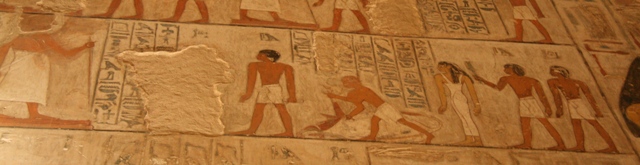


 HAIR AND DEATH IN ANCIENT EGYPT